
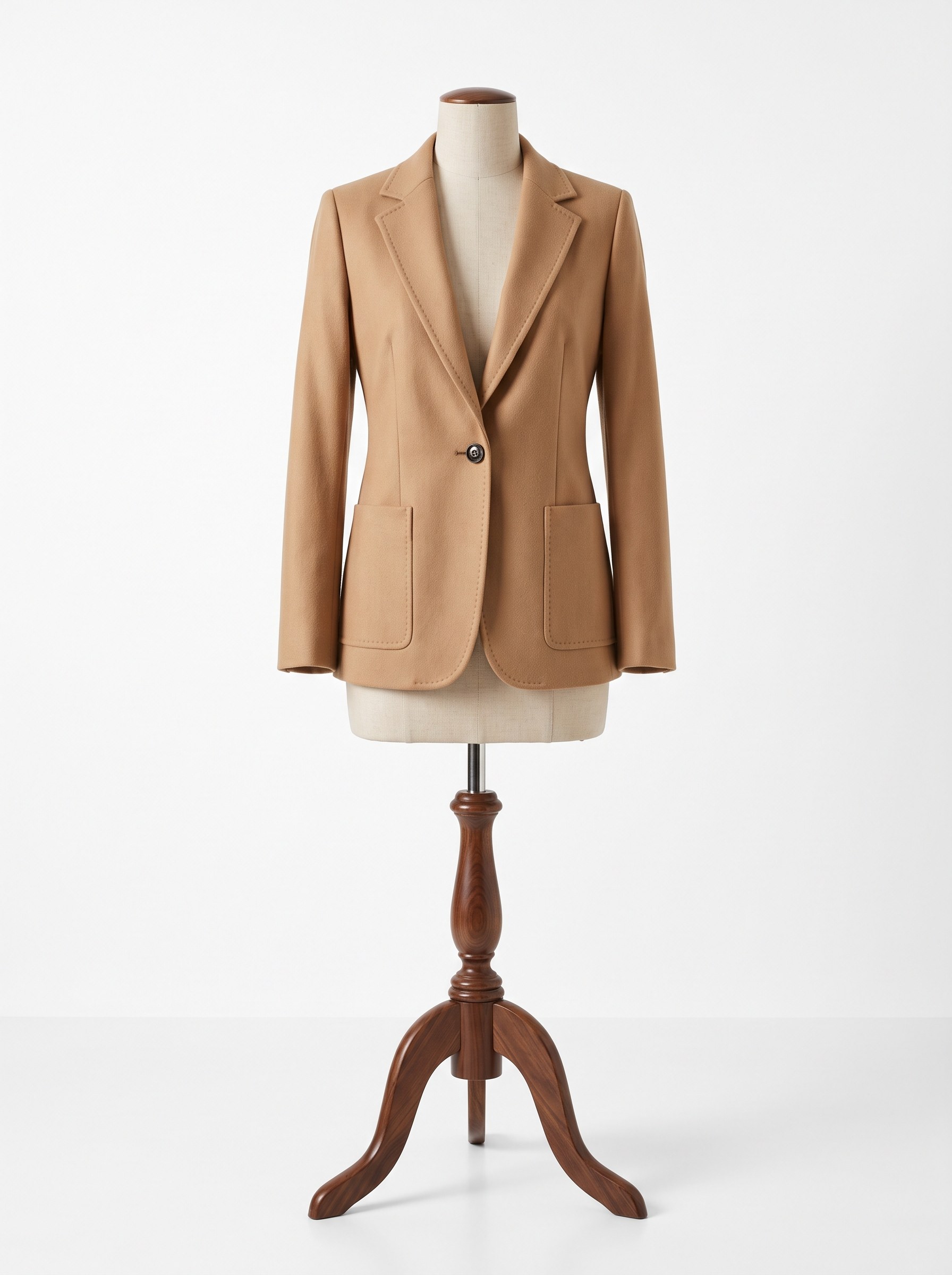
A blazer is the hinge between the formal and the relaxed halves of a wardrobe. Over trousers and a shirt it holds up in a serious meeting. Over a dress it carries a business-casual afternoon. Over jeans on a Saturday it makes the whole outfit look deliberate. Nothing else in the cupboard is asked to do that much. Made to your measurements, it fits in ways mass production cannot reach, and it will still be in service long after three ready-made ones have been given away.
What making it to measure actually changes
It comes down to fit. Ready-made women's blazers are built to a handful of standard proportions. If your shoulder width, bust, waist and torso length all happen to line up with one of them, you will find something that works. Most women do not, because most bodies do not match a size chart in all four places at the same time, and the usual result is a jacket that is right in two of them and wrong in the other two.
A blazer cut here starts from your own measurements. The shoulder finishes where your shoulder finishes. The chest buttons without pulling. The waist comes in to your waist, by as much as you want and no more. The hem lands where it needs to against the trouser or skirt you will wear it with. None of these are dramatic changes on paper, and together they make an enormous difference to how the thing looks on.
For cloth, start with a navy or charcoal in a lightweight worsted. It will go with everything you own and it will last as long as you want it to. Once that one is hanging up, a second and third can be far more interesting. A glen plaid, a fine check, a linen for the hot months. That is where the personality comes in.