
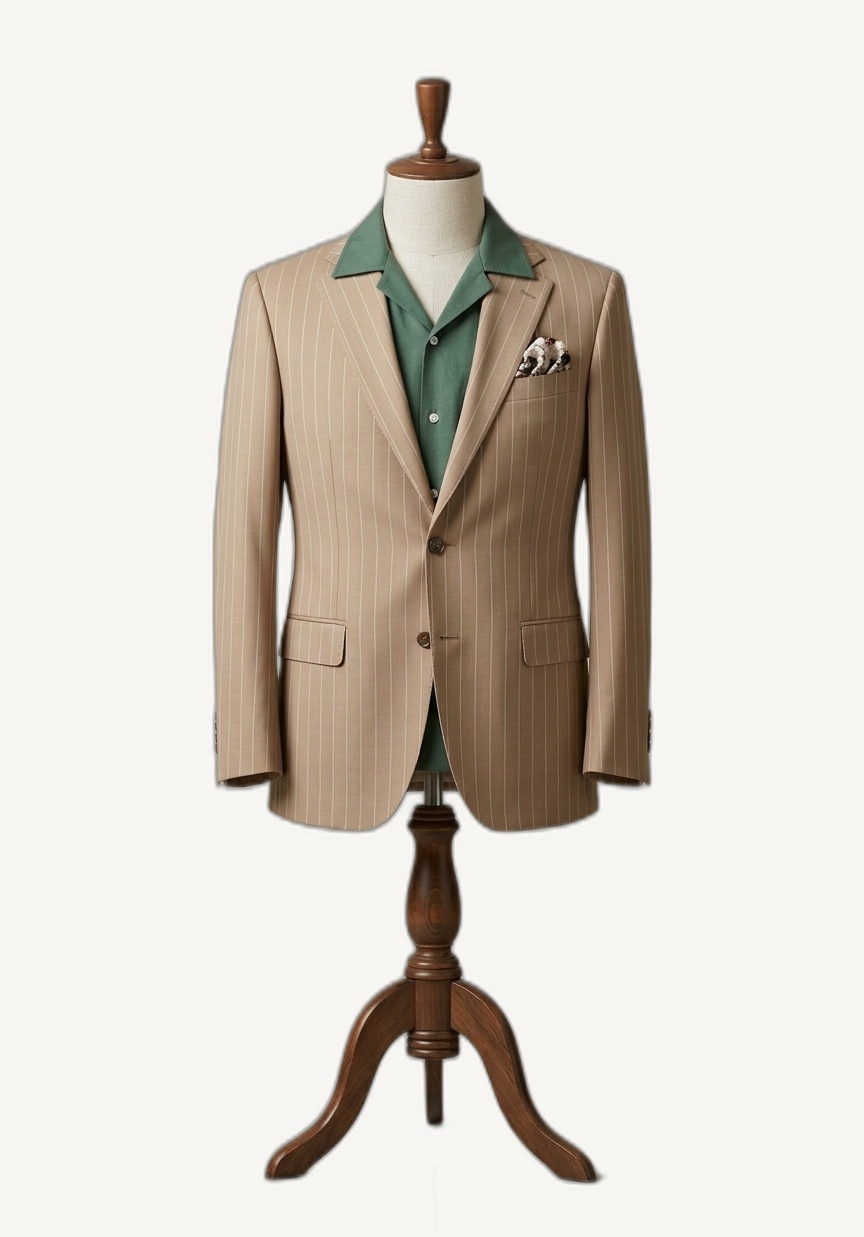
Nearly every stressful wedding commission we take started late. A bespoke suit or sherwani made properly needs eight to twelve weeks from first consultation to delivery, and more if there's heavy embroidery, several outfits, or a muhurtham falling between November and February when every workshop in the city is full. Start earlier than you think you need to. Below is what those weeks are actually spent on, so you can see where the time goes and why it can't be squeezed much.
The timeline, week by week
Week 1: the consultation. We talk through the occasion, the direction, the cloth, and take the first measurements. The brief gets settled and the fabric confirmed. This session decides everything downstream, so give it proper time and bring photographs of what you like and what you don't.
Weeks 2 to 4: pattern and basting. The cutter drafts your pattern and makes up a basted shell, a rough version in cheap cloth that carries the fit and the proportions. If there's embroidery, the panels go out to the karigars now, and elaborate work can take four to six weeks on its own.
Weeks 5 to 6: first fitting. You try on the shell. We adjust shoulder, chest, waist suppression, sleeve length and trouser rise. For a sherwani, we confirm where the embroidery sits on your actual body rather than on paper.
Weeks 7 to 9: making. The garment is built in the real cloth, embroidery applied, lining set in. This is the longest stretch and the one that can't be hurried without it showing.
Weeks 10 to 11: final fitting. The near-finished garment goes on the body. Small alterations, buttons, finishing details, pressing.
Week 12: delivery. Pressed, bagged and ready. Take it home well before the week of the wedding, not on the way to the venue.
When to walk in and start the commission
For a standard bespoke wedding suit, come to us at least twelve weeks before the date. For a heavily embroidered sherwani or a multi-outfit wedding wardrobe, sixteen to twenty. If you're marrying between November and January, which is when half of South India marries, add another two to four weeks, because the workshop is at its busiest and so is every embroiderer we work with.
The cost of booking late is real, and it isn't about panic. A garment that hasn't been through its fittings is a garment whose fit was guessed at. A fitting squeezed in three days before the wedding is one where we can't fix what we find, because there's no time left to correct it in. Give yourself enough room that the calendar never makes the decision for you. And if you're already late, come in anyway and we'll tell you honestly what's still possible, including what we can do off the ready-made floor and alter here in the same week.