
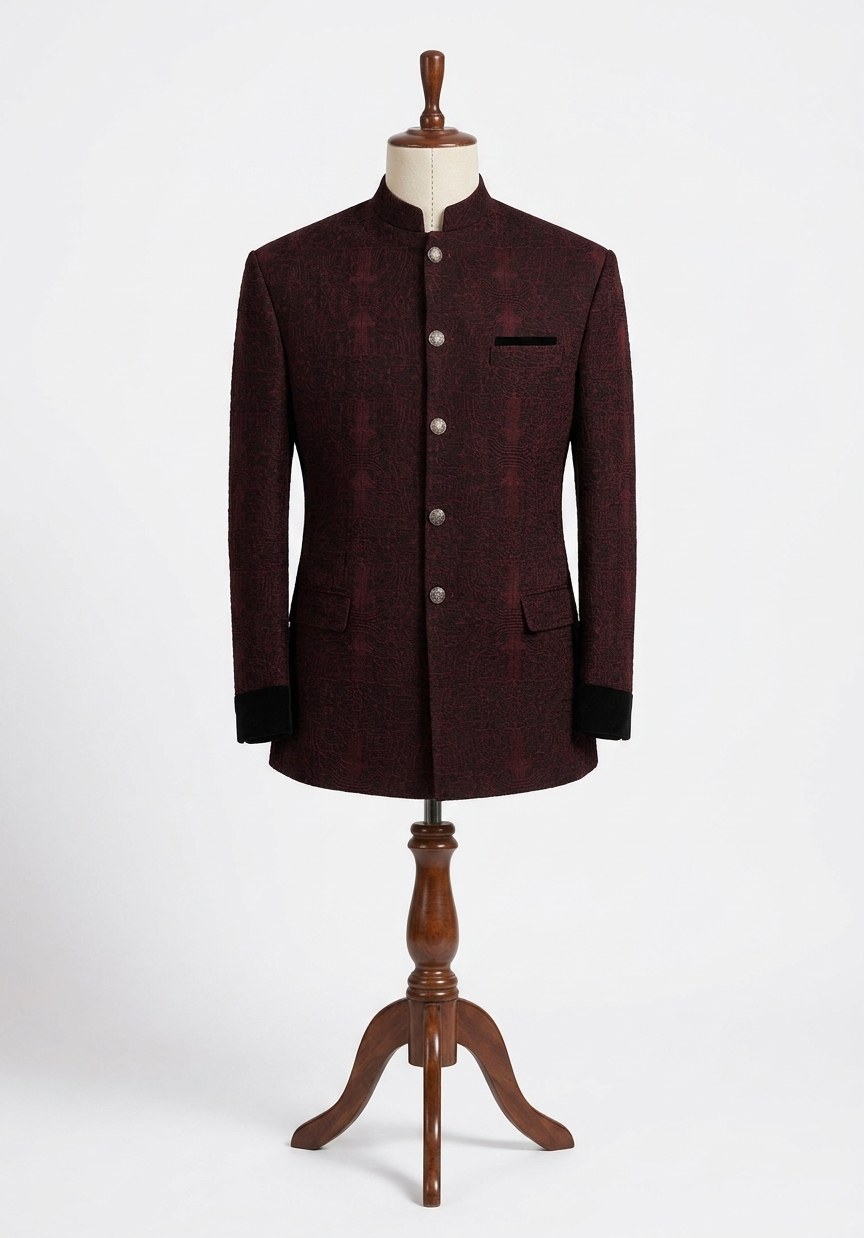
A wedding sherwani isn't just another garment. It's the thing every guest looks at, every camera finds, and every album keeps. Getting it right means the right cloth, the right amount of work on it, a fit settled properly, and the coat finished at least a fortnight before the date so nothing has to be fixed under pressure. We ask grooms to come to us at least three months out, and the commission runs across three visits at minimum: the first conversation about design and cloth, the fitting on the basted shell, and the final fitting on the near-finished coat.
How early to start, and why three months is the answer
Three months before the wedding is our standard answer. That gives room for the first conversation and the cloth selection, the pattern and the cutting, the basted fitting, the embroidery, which often goes out to specialist karigars who have their own queue, the building and lining of the coat, and the final fitting with whatever adjustments come out of it.
For something more ambitious, a heavily embroidered coat, all-over zardozi, or an unusual cloth we have to source, give us five or six months. The single most common mistake grooms make is leaving it late. Then either the coat never gets its proper final fitting, or we have to tell you we can't do it to the standard we'd want our name on. We'd rather have that conversation in month one than in the last week.
Cloth that works for a Chennai wedding
Most sherwani cloth is chosen for how it looks under lights and almost never for the weather it will be worn in. In Chennai that is a mistake. A heavy brocade or a velvet sherwani is glorious in an air-conditioned hall in December and a punishment at a morning muhurtham in May. So the first thing we ask is the date, the time and whether the venue is air-conditioned, and the cloth follows from the answers.
For most of the year here we steer grooms towards raw silk, a fine silk-cotton, or a lighter brocade with the pattern in the weave rather than piled on top. They photograph as richly as the heavy cloths and they let you stand through a long ceremony. The lining matters as much as the shell: a cotton or a fine viscose lining breathes, a cheap polyester one does not, and you will know the difference by the third hour. All of it is cut and fitted at the Adyar workshop, so you can see and handle the cloth before anything is committed.
Fit first, then the embroidery
A sherwani is a long, close coat, and it is unforgiving. The shoulders have to sit exactly, the chest has to close cleanly without pulling at the buttons, the collar has to stand without gaping, and the length has to land where it flatters your height rather than where the pattern happened to end. These are the same things we check on a suit, and we check them the same way: on a basted shell at the first fitting, before a stitch of embroidery goes on.
The embroidery is the last decision, not the first. Once the fit is settled we talk about how much work the coat should carry: a plain coat with work at the collar and cuffs, a more elaborate front panel, or all-over zardozi. The heavier the work, the earlier it has to go to the karigars and the longer it takes to come back, which is why the calendar in the section above matters. A well-fitted sherwani with restrained embroidery will always look better than a poorly fitted one drowning in it.
Cloth and embroidery: decide them together
The two big decisions are the cloth and how much work goes on it, and they have to be taken as one. Heavy embroidery wants a plain silk or velvet ground, because the work is the decoration and a patterned cloth underneath just fights it. Light embroidery frees you to use a more interesting ground: a brocade, or a cloth with a subtle woven pattern doing the quiet work instead.
In North Indian tradition, gold work on ivory or cream silk or velvet is the classic and the most formal. In Tamil, Telugu and Malayali weddings the palette leans towards warmer golds and ochres, usually with less embroidery and more attention paid to the quality and colour of the cloth itself. We work with both, and if the two families are coming from different traditions, that's a conversation worth having with us early rather than the week before.
Finishing the wedding outfit: churidar, jutti and more
The sherwani is worn with a churidar in the same cloth or a complementary one, usually ivory, cream or white under a light sherwani and a matching dark tone under a jewel-toned one. On the feet, jutti, the embroidered leather slip-on, picked up from whichever colour the embroidery on the coat is working in.
A sarpech for the turban and a dupatta over one shoulder are optional and belong to the more traditional ceremonies. Where a dupatta is worn, we'd normally take its colour from the embroidery thread or the churidar. We can advise on all of it and source matching jutti and dupatta through people we deal with here in Chennai and in Jaipur, so you're not chasing four shops in the last fortnight.