
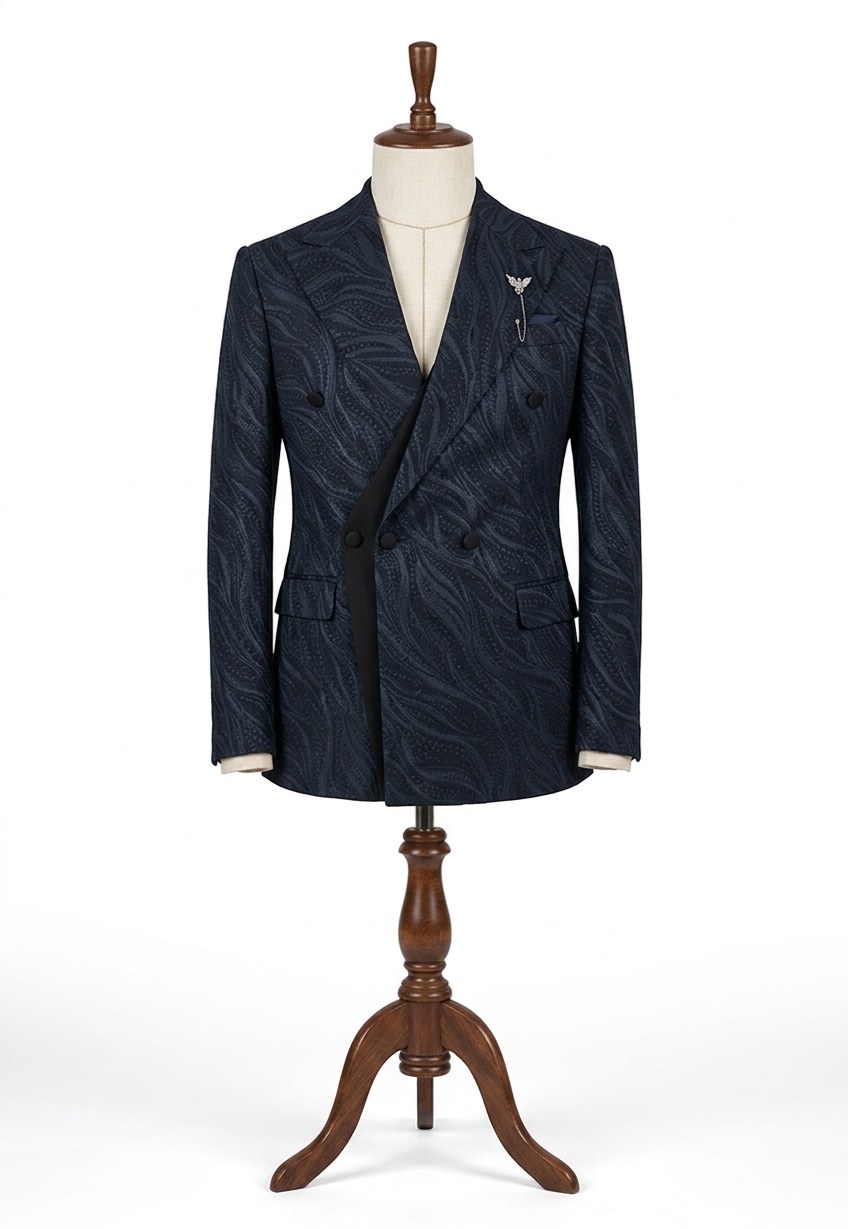
Photography has changed how wedding clothes get chosen, and mostly for the better. Your outfit now has two audiences, the people in the hall and the camera, and they don't always agree. Cloth that looks flat across a room can come alive on camera, and a colour that looked rich in the shop can go grey under a photographer's lights. Knowing how this works lets you choose an outfit that photographs as well as it wears, and occasionally better.
How different cloths read on camera
Brocade and embroidered cloth photograph better than almost anything. The surface is three-dimensional, so it shows depth and detail under any lighting a photographer throws at it, and a brocade sherwani has a richness that flat cloth can't fake. That's a large part of why brocade has stayed the premier wedding cloth in India through decades of changing taste. It simply loves a camera.
Fine worsted wool in a solid colour photographs clean and formal. A good worsted reads as quality with no texture competing for attention: sheen in direct light, depth in diffuse light. A charcoal or navy worsted suit will look right in the church, at the reception and in the outdoor shots, which is more than most cloths manage in one day.
Linen photographs with its creases, and those creases read as relaxed or as careless depending on the light and how long you've been sitting down. If you're in linen, get the pictures you care about taken early in the event rather than after four hours in a car and a chair.
Colours that photograph well, and ones to watch
Indian weddings mix daylight, hall lighting and flash in a single evening, so the colours that work are the ones with enough separation from the background and from your partner's outfit. Ivory and cream photograph warm and clean and cope with any light. Navy and charcoal hold their colour in dim rooms better than pale shades do. Jewel tones, burgundy, emerald, teal, come out saturated and deliberate.
Handle these with care: very light grey can go either white or muddy depending on the light. Very bright saturated colours, shocking pink, neon yellow, can bloom on camera and pull attention off your face. Black under direct flash loses its texture and turns into a flat shape. If you're unsure, send a swatch photograph to your photographer before we cut. Most of them have a firm view on what works in their lighting, and it's a five-minute question that saves a real regret.