
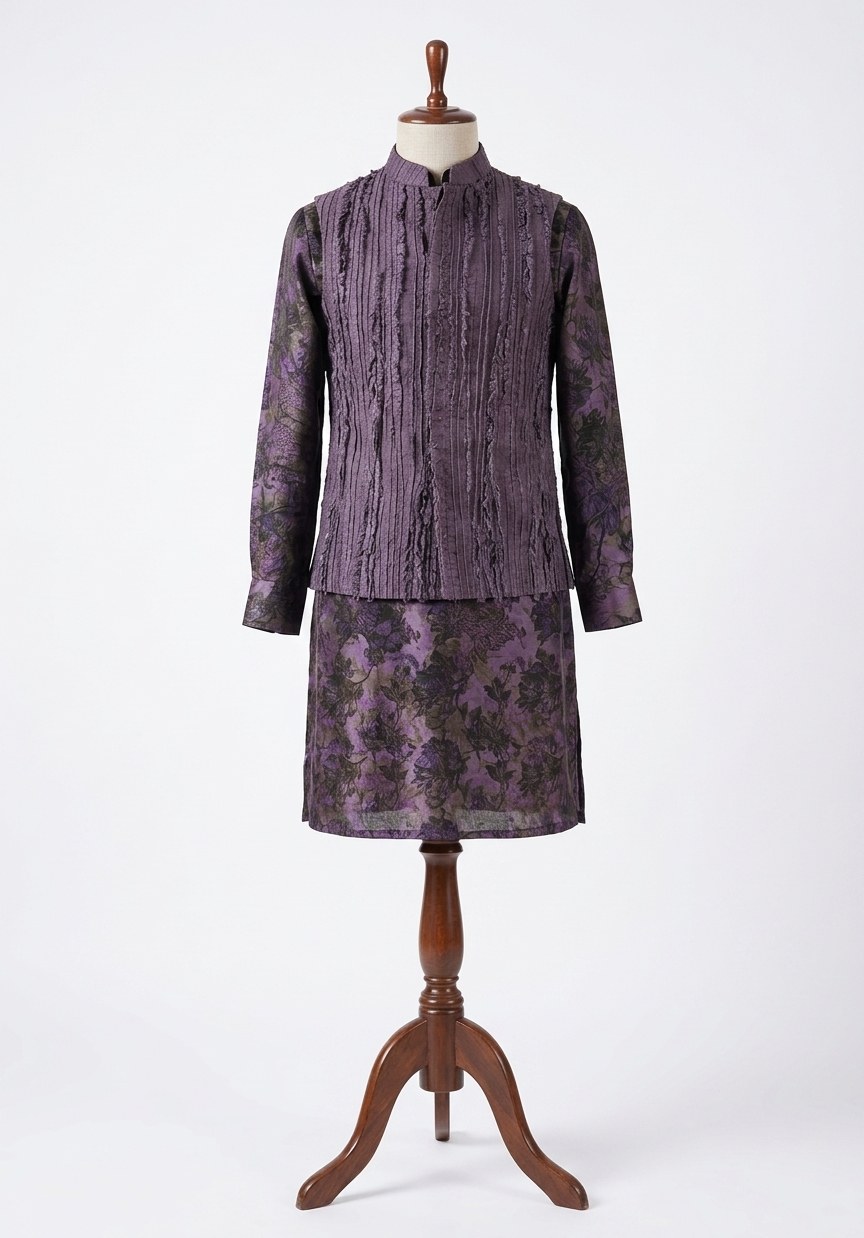
Indian weddings don't stop at the ceremony. There's the mehendi, the sangeet, the reception dinner, and the brunch the next morning while half the guests are still checking out. Every one of them carries its own dress expectation, and the groom who thought about all of them turns up right each time instead of wearing the ceremony outfit twice or standing at a brunch in a sherwani. We plan the whole weekend with grooms, not just the main day.
The reception dinner and what it asks you to change
The reception, usually a big formal dinner on the wedding evening or the next one, wants a different outfit from the ceremony. If you wore a heavily embroidered ivory sherwani at the muhurtham, come to the reception in a jewel-tone bandhgala or a rich silk Jodhpuri. If you wore a suit, the evening can take more colour or texture, or a switch into Indian formal wear entirely.
The one rule: the reception outfit should feel like the same wedding, and it should be made to the same standard. Grooms who spend everything on the ceremony and then turn up in something ordinary for the reception are telling the room which event mattered, whether they mean to or not. Plan both together and the budget spreads more sensibly across the two.
The morning-after brunch: relaxed but considered
The brunch, where everyone gathers for a slow meal before flights and trains, calls for smart casual and nothing more. A fine kurta in a good cotton or silk-cotton, or a well-cut chino and shirt if you'd rather be in Western clothes. Still make it something decent, though. The same people who watched you at the mandap are sitting across the table with coffee.
The brunch is also a nice chance to be seen as yourself again rather than as the centrepiece. A linen kurta in a soft colour, cream, pale blue, a muted terracotta, reads as relaxed on purpose. That's a different thing from having run out of clean clothes on day three, and everyone can tell the difference.