
A Punjabi Hindu wedding is loud in the best way: several days of it, plenty of colour, and a crowd that turns up to every single event. The groom's dress travels with it, from something colourful and semi-formal at the mehendi, to the grandest sherwani he will ever wear for the baraat and the pheras, to a polished formal look at the reception. We plan all three stages together so the progression feels deliberate instead of accidental.
The pheras and baraat: the classic Punjabi sherwani
The classic is a heavily embroidered ivory or cream sherwani with gold zardozi, worn with the sehra for the baraat and the pheras. This is the single most photographed moment of the wedding and it's where the money and the attention go. A fine Banarasi silk sherwani with good embroidery, cut to your own measurements, is the standard worth aiming at rather than the one you settle for.
There's some room on colour. Ivory and cream are the most traditional, but pale gold, champagne and a warm off-white all sit comfortably inside the tradition. Light pastels, blush, mint, powder blue, have been popular with younger grooms for a few seasons now. Wear one if you actually like it. Wear one because it's trending and you'll notice it every time you open the album.
The reception: a suit or a second sherwani?
Punjabi receptions are usually big hotel ballroom evenings with a long guest list, live music and a sit-down dinner. Most grooms change for it. That gives the evening its own identity, and it means the guests who couldn't make the ceremony see you fresh rather than eight hours into a sherwani in Chennai humidity.
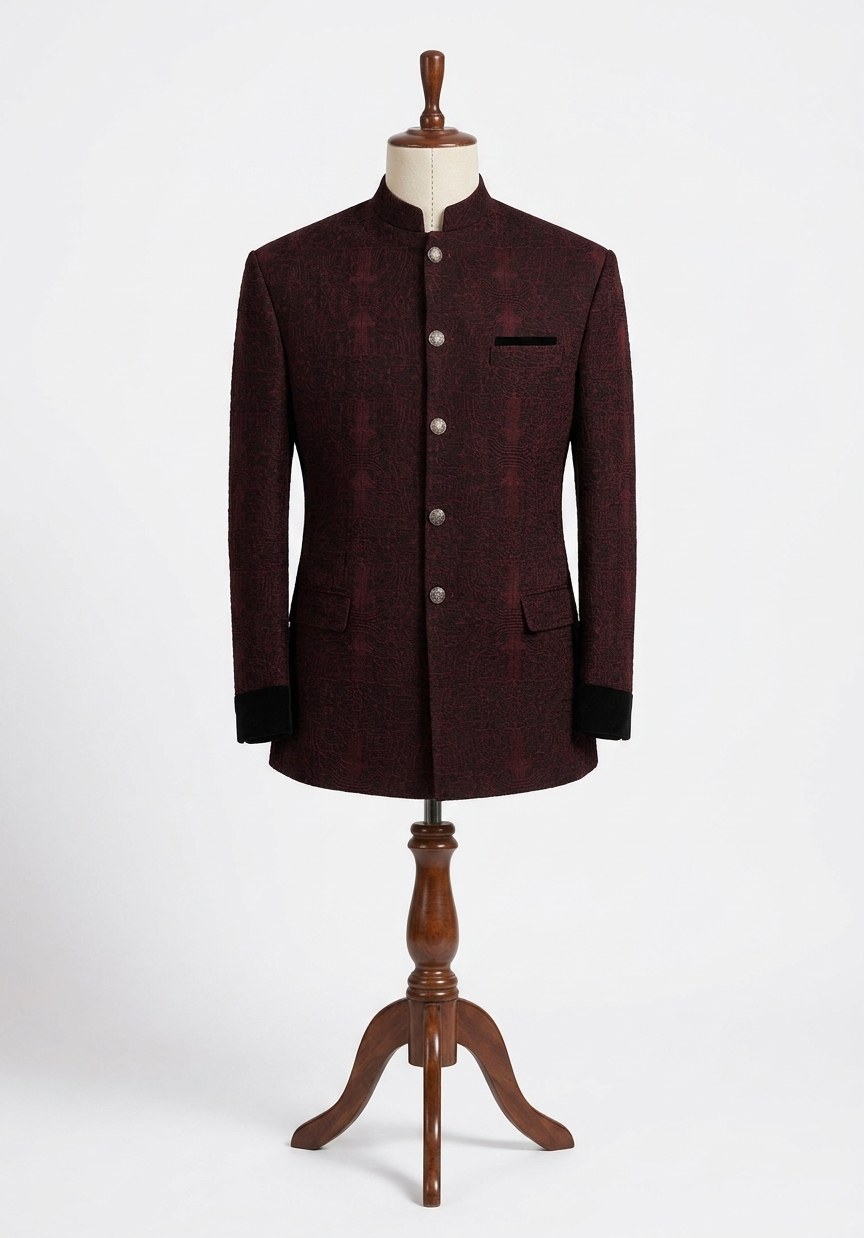
A good Western suit works, and so does a second sherwani or a bandhgala. If the pheras sherwani was cream, go richer for the evening: a navy bandhgala, a deep teal Jodhpuri, or a charcoal suit. The point is that it should feel like the next chapter, not a different book altogether.