
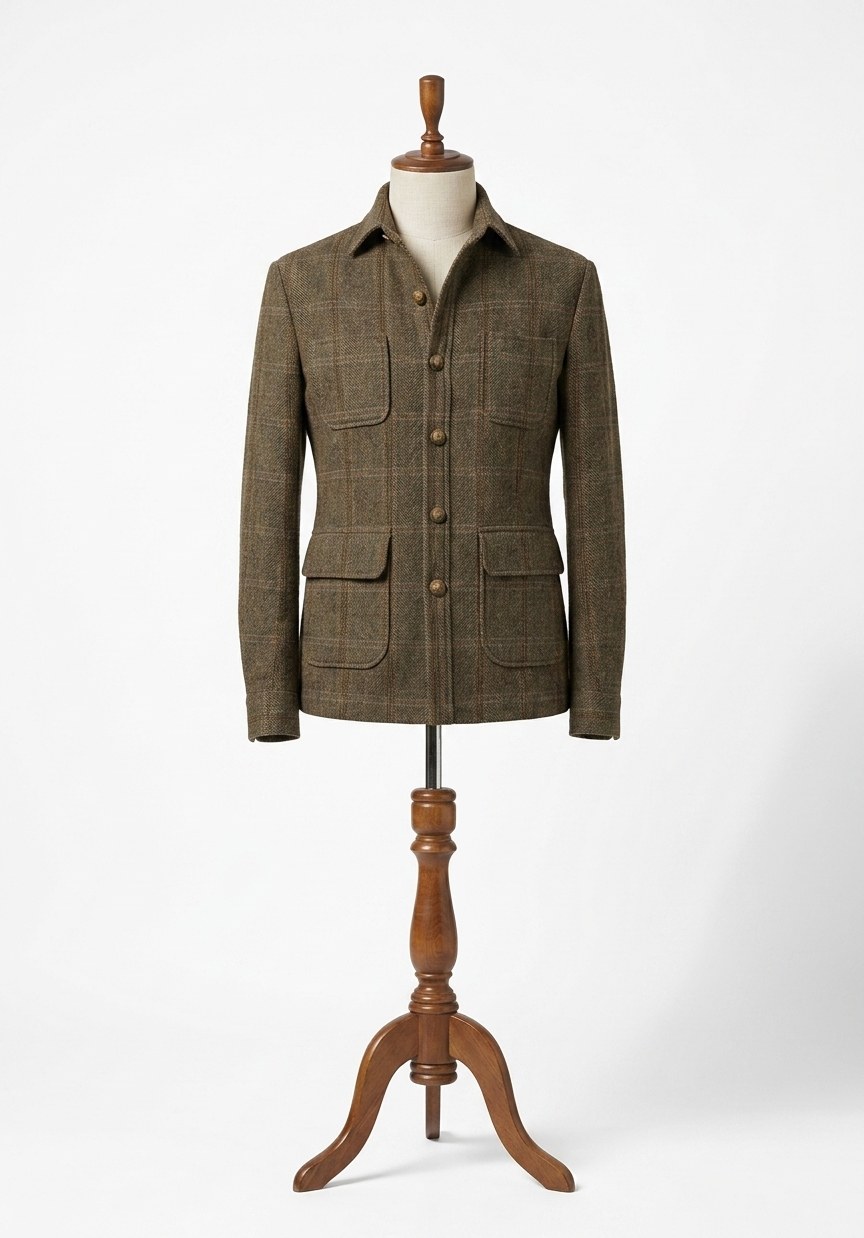
A monsoon wedding has something no other season offers: wet green everywhere, soft grey light, the smell of the first rain, photographs that look like nothing else in the album. It also has humidity, a real chance of rain on the day, and a plan B that probably involves moving indoors. Choose the suit or sherwani for those conditions specifically. A garment picked for a generic wedding will spend the evening fighting the weather, and the weather usually wins.
The cloths that survive monsoon humidity
Rain isn't really the problem; humidity is. Saturated air gets into natural fibres and changes how they behave. Wool takes on moisture, goes heavy and is slow to spring back into shape. Silk can feel clammy against the skin once the air is thick. Neither is ruined, but both stop performing the way they did in the fitting room in April.
The most reliable monsoon cloths are fine tropical wools with a tight weave that doesn't drink moisture, and fresco, whose open structure lets damp air pass through instead of holding onto it. Linen surprises people here: it absorbs humidity readily and can feel heavy and limp by mid-evening. A fine 130s tropical worsted in a tight plain weave is the safest wedding cloth we know for the rains.
Choosing colours for flat grey monsoon light
Monsoon light is diffuse, overcast and cool-toned, and it changes how everything photographs. It's kinder to skin than direct sun, but it also drains colour out of cloth. Shades that blaze in sunlight can look washed and tired under that flat grey sky, while richer, more saturated colours hold their own comfortably.
Good monsoon choices: deep navy, which looks superb in grey light, charcoal, burgundy, forest green, or an off-white warm enough to register as cream rather than dishwater. Avoid pale grey and very light champagne, which lose themselves against an overcast background. In ethnic wear, rich brocades and saturated silks come through the soft light particularly well.