
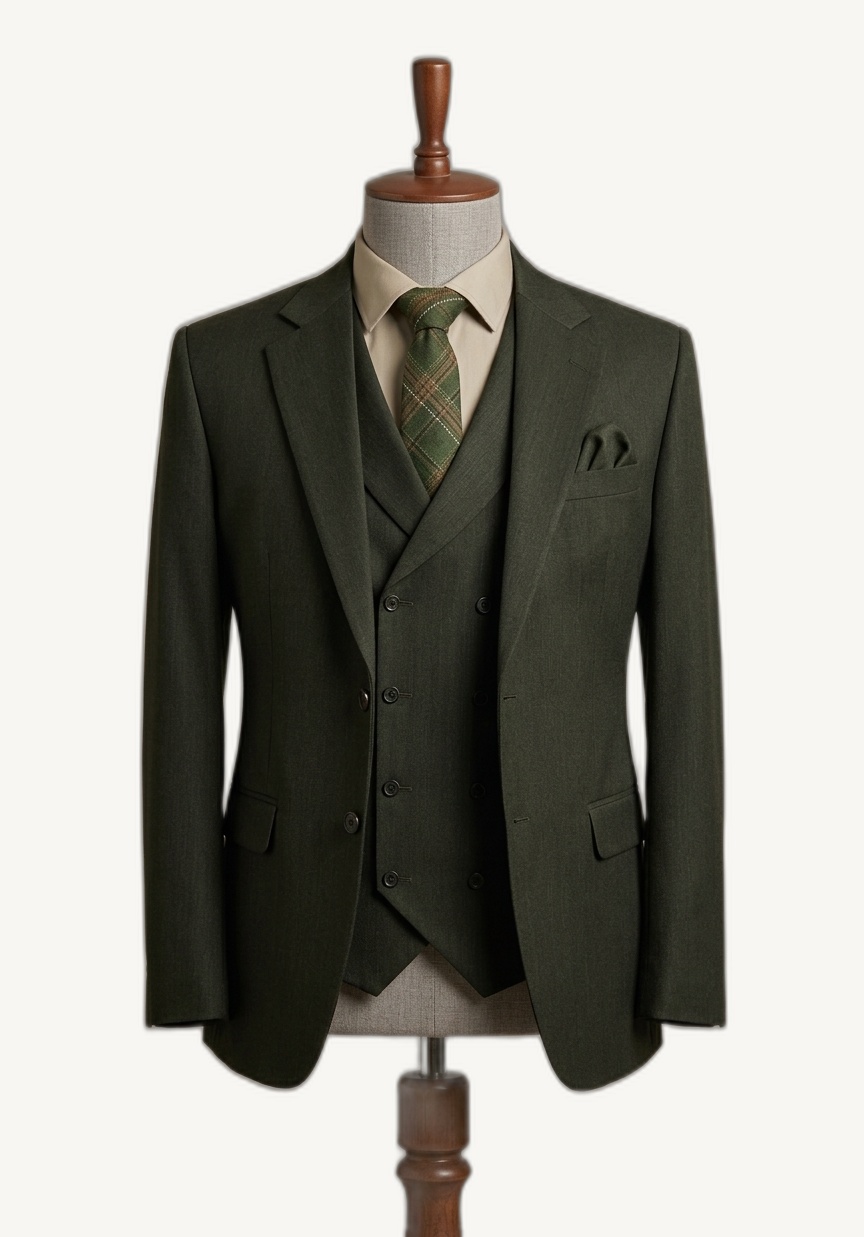
There's no single number for a bespoke wedding garment. There's a set of choices, and each one moves the price: the cloth, how the garment is built, how much embroidery goes on it, and how many fittings it takes to get right. Once you can see which choice is doing what, you can decide where to spend properly and where to be sensible, instead of staring at a total and hoping it's fair. Here's how we would explain it across the counter.
The three things that actually move the price
Cloth is usually the biggest single component. A good Indian suiting from Raymond and a 150s worsted from Holland & Sherry or Scabal are several multiples apart per metre, and you can feel the difference in the hand before you feel it in the wallet. For a garment worn once and then kept for thirty years, the cloth is the part of the decision that ages best. Good cloth in a simpler make will outlast mediocre cloth with clever details every time.
How it's built comes next: full canvas, half canvas or fused, how much is stitched by hand, what goes in for lining. Everything bespoke we make carries hand-stitched lapels and a full or half canvas as standard, because below that line you're paying bespoke prices for something that will lose its shape in a few seasons.
Embroidery applies to sherwanis, bandis and the rest of the Indian formal wardrobe, and it's priced by how complex and how covered the design is. An all-over zardozi sherwani from a good Lucknow karigar costs several times what collar, placket and cuff work costs. That cost is almost entirely somebody's hours, and it shows in every close photograph taken of you that day.
Where to spend, and where you can sensibly save instead
Spend on cloth. It's the one thing that can't be improved after the garment is made. Construction can be repaired, embroidery can be added, a fit can be adjusted years later, but poor cloth stays poor for the life of the piece. If the budget is tight, buy the best cloth you can and take a simpler make rather than the other way round.
With embroidery the same rule holds: a modest amount of excellent work beats a lot of average work, and the difference is obvious at arm's length. And for the parts of the weekend that aren't the main ceremony, there's no shame in taking something off our ready-made floor instead. The same tailors who cut our bespoke do the alterations, usually inside the same week, so it fits properly and it frees the budget for the outfit that actually matters.