
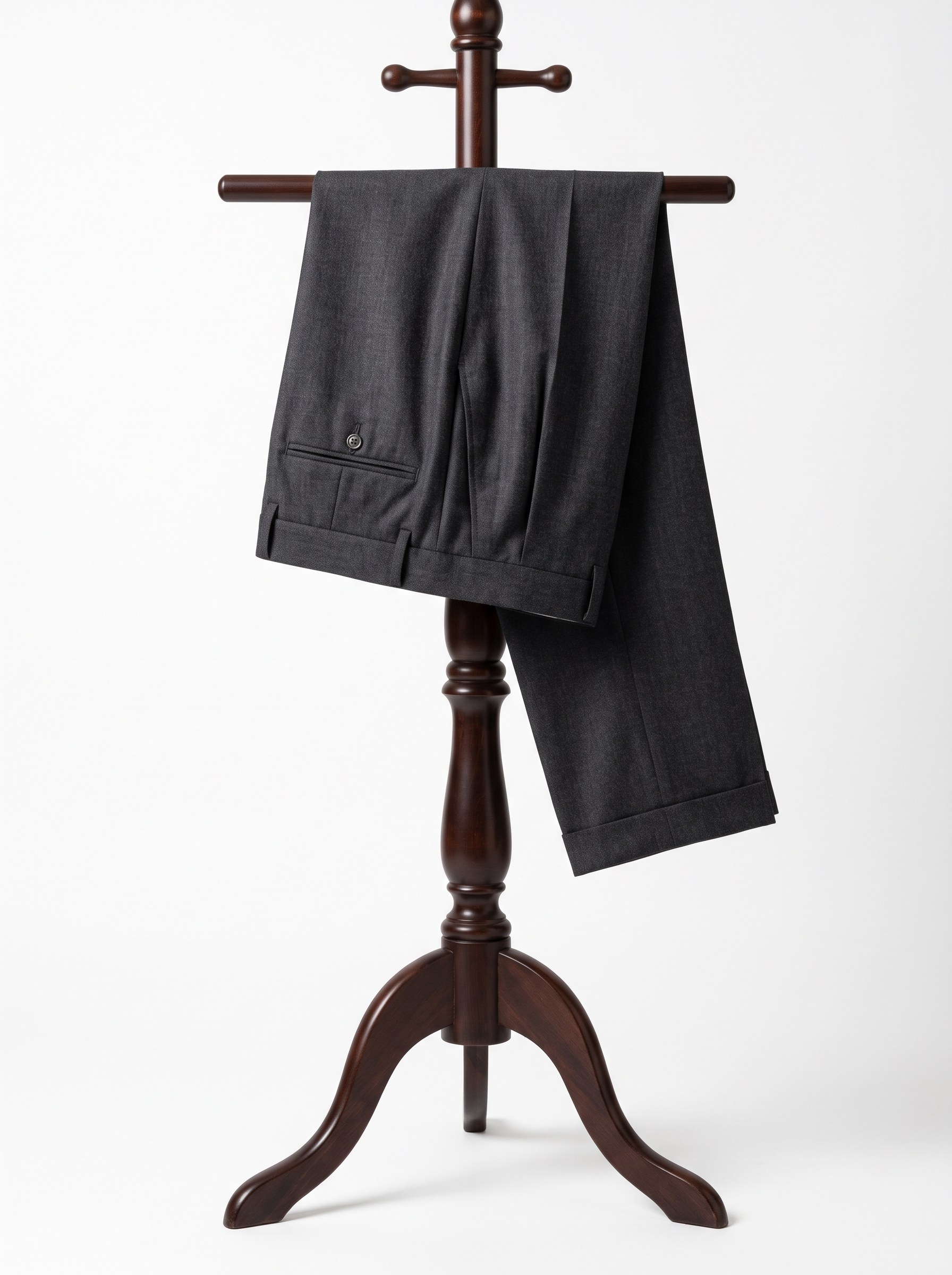
Pleats got a raw deal from fashion. For twenty-odd years the line was that flat fronts were modern and pleats were for your father, which was nonsense then and is nonsense now. A pleat does a job. It releases cloth through the thigh when you sit or walk, it hangs better from the waist on plenty of builds, and it lets us cut a fuller leg that moves far more gracefully than a trouser cut to the bare minimum. The best-dressed men in the world never stopped wearing them, and neither did our workshop.
Forward or reverse, single or double
A pleat is simply a fold of cloth at the waistband that opens out to give the thigh room when the leg moves. There are two kinds. Forward pleats open towards the centre front of the trouser, reverse pleats open towards the side seam. Forward is the traditional and far more common choice, and it is what we suggest to almost everyone ordering pleats for the first time.
One forward pleat each side gives you a modest amount of extra room and a quietly classical look that nobody will ever comment on, which is rather the point. Two each side gives you a lot more room and a more generous line through the leg. Double pleats want a fuller cut and a higher rise to work, and they are the trousers of the great British and Italian dressers of the mid-twentieth century. Made in a cloth with enough weight and drape to carry the fullness, they are a beautiful thing. Made in something thin and limp, they sag, so let us pick the cloth with you.