
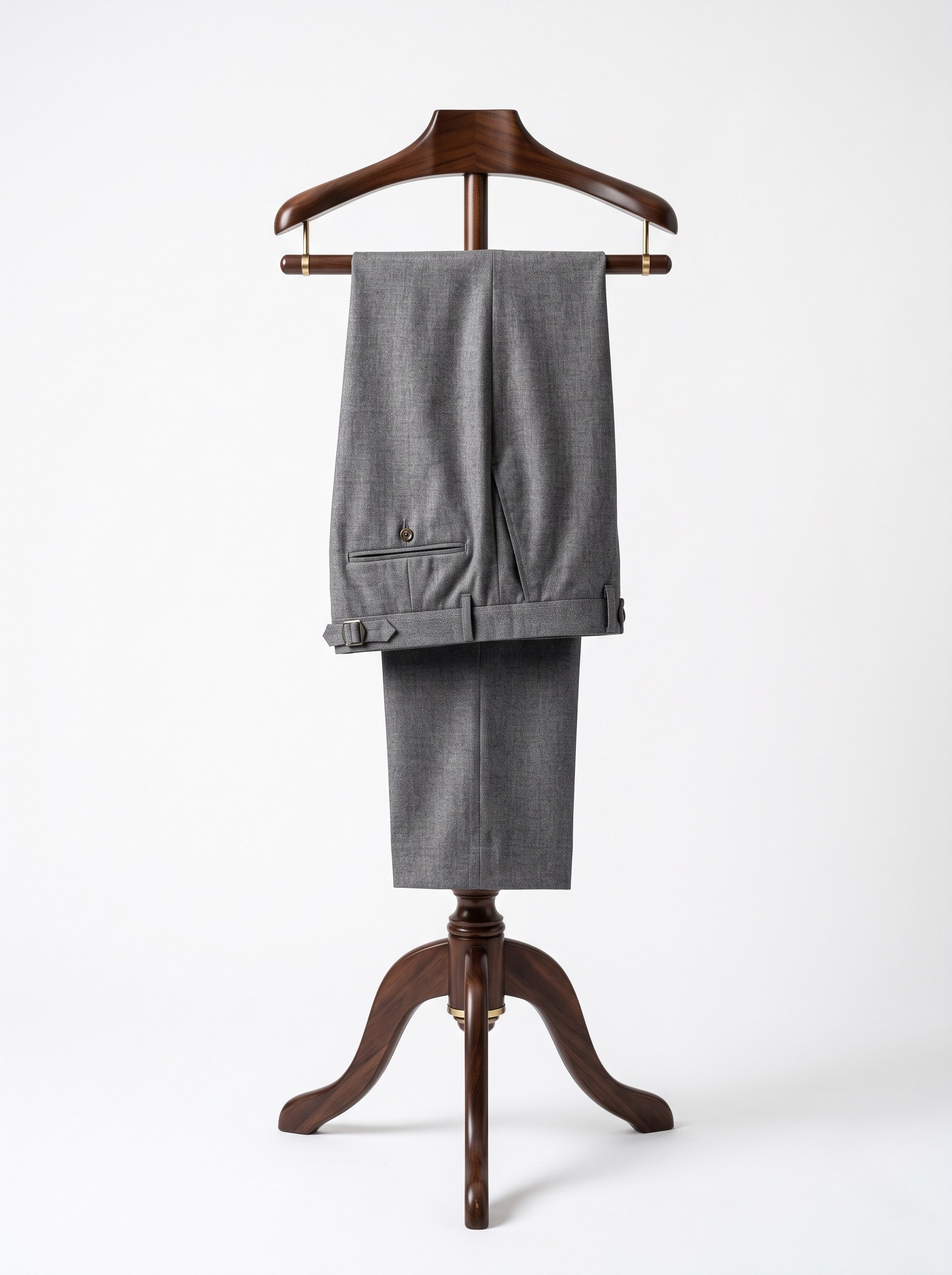
No pleats, just smooth cloth running from the waistband down to the break. It is the trouser most men are picturing when they say they want something that actually fits, and it is by far the most worn shape in professional dress today. Where a flat front cut off a standard block parts company with one cut from your own measurements comes down to three places: the way the waist relates to your hip, how it sits over the seat, and how it falls through the thigh. Get those three right and everything else follows.
Why flat fronts are harder than they look
A flat-front trouser looks plain and simple, and it is neither. With no pleats there is no spare cloth to absorb the difference between your waist and your seat, so the trouser has to be cut to your actual measurements or it will do one of two things. Either it drags across the seat and hips, or it hangs slack and shapeless. That is the reason so few off-the-rack flat fronts fit anybody well. They are built to an average waist-to-hip ratio, and almost nobody is average.
Cut here, the pattern starts from your numbers. Your waist, your hip, your rise from waistband to crotch, your thigh. The trouser then sits flat across the front without pulling, runs through the seat without bunching or sagging, and falls through the thigh and knee without twisting on the leg as you walk.
The break, meaning how much cloth folds over the shoe, gets settled at the fitting. A clean no-break is where most people land now. A half-break, with just a slight fold at the front, buys a little visual length. A full traditional break belongs on more formal or old-school trousers, and it still looks very good on the right man.
What to have them made in
Flat fronts can be cut in more or less any suiting or trousering cloth we hold. If they are part of a suit, the jacket has already decided for you. As an odd trouser, worn with a blazer or a sports jacket, the field opens right up and this is where it gets interesting.
For work, a medium-weight worsted in grey, charcoal or navy will do more than anything else in the drawer. A slightly heavier mid-grey flannel is the traditional partner to a tweed or herringbone jacket and looks wonderful with one. For the hot months, linen or a light cotton in stone, cream or pale blue goes with a linen or cotton blazer without any thought at all. And if you want a trouser that will take some punishment, a cavalry twill in tan or mid-brown is hard to wear out.