
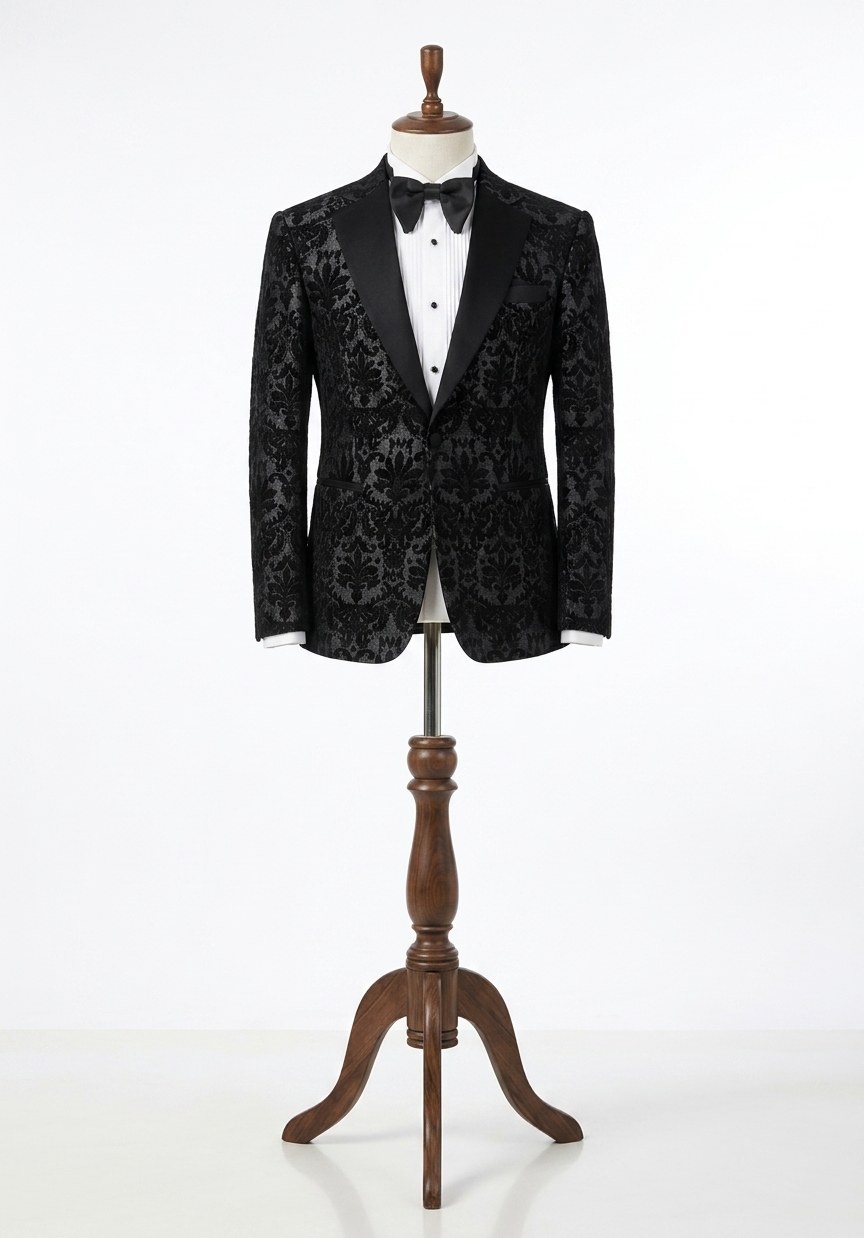
Nothing else in a man's wardrobe comes with such a fixed set of rules, and nothing else shows the difference between a suit made for you and a hired one quite so plainly. Black tie is specific. The jacket, the lapel facing, the braid on the trouser, the shirt, the bow tie. Miss one of them and the whole thing wobbles slightly, even if nobody can tell you why. We make dinner suits in the right cloths with the right details, fitted to you exactly, and a good one will still be doing its job at black-tie evenings twenty years from now without a stitch of alteration.
The rules of black tie, and why they hold
Black tie has rules and they are not arbitrary. The suit should be black or midnight blue, and midnight blue is the cleverer choice because under artificial light it reads blacker than black does. The cloth is usually barathea, a close smooth twill with a faint sheen, or fine doeskin, or a light even-weave wool with a dull surface. Nothing shiny, nothing novelty. If someone tries to sell you a sparkle in the weave, walk away.
The lapel, shawl or peak, is faced in silk grosgrain or satin. That facing is the only shine allowed anywhere on the jacket. Grosgrain is the British answer, satin the continental and American one. The difference is small and both are correct, so pick the one you like the look of.
The trouser carries a single silk braid down each outside seam. One braid, not two. Two is white tie. No turn-ups, and no belt loops either, because a dinner trouser is worn with braces.
The shirt is white, either plain fronted or pleated, with no frills and no fuss. Stiff separate collar or a soft turndown collar, both fine. Double cuffs with links, never buttons. And the bow tie is one you tie yourself. A pre-tied bow is not black tie, however good it looks in the mirror.
Building the jacket and the trouser
Dinner jackets get our full-canvas build. Evening cloth has a particular weight to it and the canvas is what keeps the front clean and the shape holding through a five-hour evening of standing, sitting and being photographed. The silk lapel facing is stitched at the edge by hand so it lies flat and keeps its line.
You can have a single-breasted jacket with a shawl lapel, which is the most traditional black-tie answer, or a peak lapel, which is a little bolder and every bit as correct. A notch lapel is the modern option. Strictly it is the least formally correct of the three, and it is now so widely worn that nobody will blink. A double-breasted dinner jacket is a fine choice too, and an elegant one.
The trouser has its braid applied by hand and is fitted with brace buttons instead of belt loops. We cut it a touch longer than a business trouser, as evening dress wants, finishing with a small clean break on the shoe.