
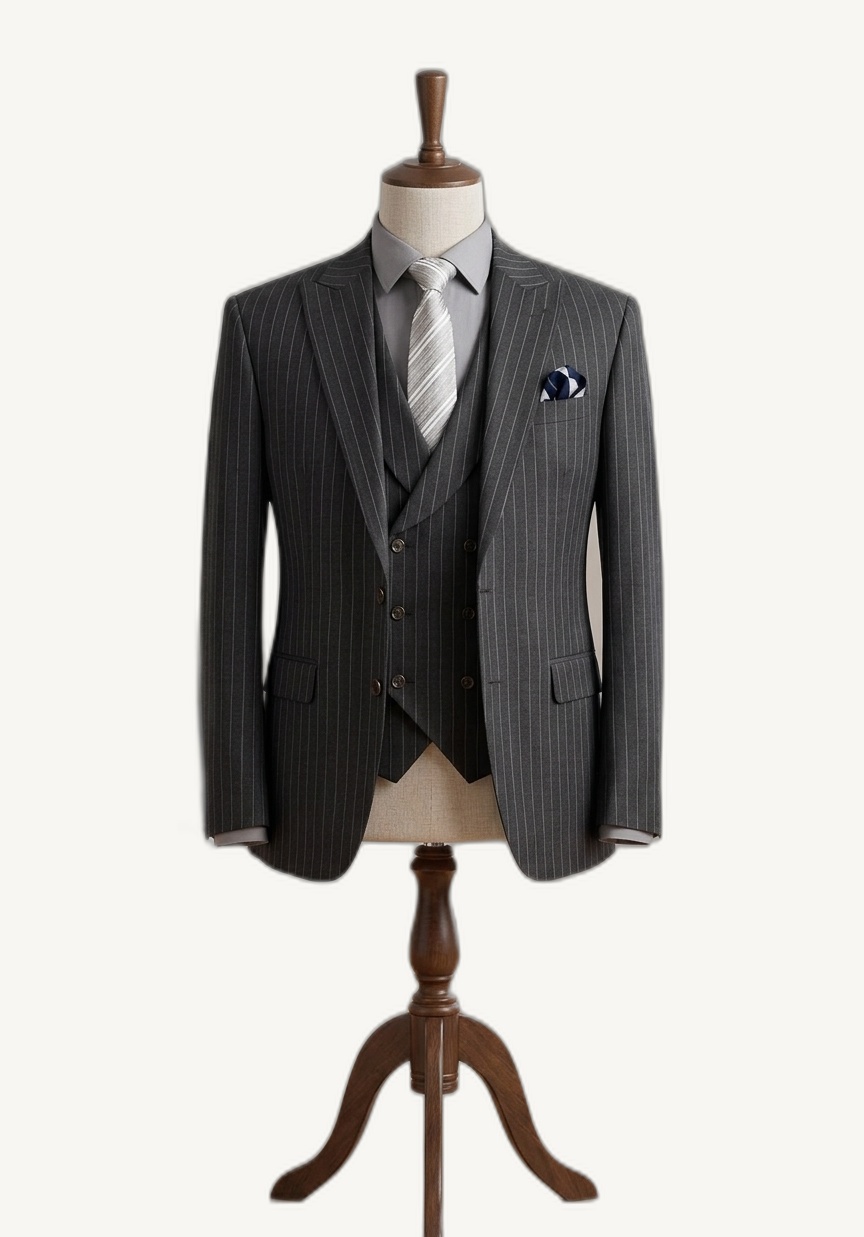
Add a waistcoat to a two-piece and everything changes. The suit reads a step dressier, and it gets more practical too. The waistcoat keeps the chill of a fierce office air-conditioner off you, and it means you can take the jacket off at a long function without suddenly looking undressed. Nobody wears a three-piece by accident, which is exactly why it lands. We build them the way we build everything else here: a pattern taken from your measurements, cloth from the mills we keep on the shelf, and two or three fittings before you take it away.
The waistcoat, and when it earns its place
The waistcoat used to come as standard. Over the last century it retreated to weddings and to a handful of men who kept wearing it because they liked it. That is the interesting part. Nobody puts one on out of habit any more, so a three-piece always looks like a decision, which is something a two-piece can never quite manage.
It should sit close without squeezing. Snug through the chest and waist, no gaping at the front, nothing pulling across the back. The V at the top has to line up sensibly with the jacket lapel that sits over it. The bottom point wants to cover the top of your trouser waistband by a centimetre or two, so that when the jacket comes open there is no strip of shirt and waistband showing.
Cut all three pieces from the same cloth and you get the complete, formal version. Put a different cloth in the middle, a cavalry twill under a flannel suit, or a fine wool under linen, and the whole thing becomes more personal. Either works. We will talk it through when you come in.
As for when to wear it: serious meetings, presentations you have prepared hard for, anything where you want to look like the day matters. And weddings, where it is easily the best answer for a guest who wants to be well dressed without going anywhere near black tie. It also suits a groom who wants a suit rather than a sherwani.
Making all three pieces talk to each other
A three-piece is harder to get right than a two-piece, mostly because the waistcoat has to agree with the jacket and trouser on button stance, on how deep the V sits, and on proportion generally. So we cut all three at the same time from the same length, matching the pattern across the pieces wherever the cloth has a stripe, a check or a visible weave.
The jacket is canvassed to the same standard as our two-piece suits. The waistcoat gets a light interlining at the front so it keeps its shape, with a plain back in lining cloth, which is how it has always been done. The trouser follows the jacket and waistcoat in cloth and proportion.
At the fittings we put all three on together, because that is the only way to judge the silhouette honestly. The middle fitting deals with jacket and trouser. The waistcoat goes on at the final fitting, once the other two are settled and we know exactly what it has to sit against.
Cloth and the style choices
A three-piece wants a bit of body in the cloth so all three pieces hang cleanly. A very light tropical worsted is a sensible answer to Chennai heat, but it can look thin once there is a waistcoat involved. A fine worsted around 260 to 280 gsm gives the suit the presence it needs, and in the cool months a flannel is hard to beat.
For colour, the safe and good territory is dark charcoal, navy or a medium grey. A chalk stripe lifts the formality without making a fuss. A glen plaid in quiet tones is the more characterful route and it photographs beautifully. We have made three-piece suits in most things on the shelf, so ask us at the consultation and we will pull a few lengths out for you.
The jacket usually carries a peak lapel, which is the historical partner to the three-piece, though a notch lapel is perfectly normal now. The waistcoat generally closes with six buttons and a V that finishes just above the jacket top button. Those proportions have been worked out over a very long time and they still hold, so that is what we recommend unless you want something else, in which case say so and we will cut it your way.