
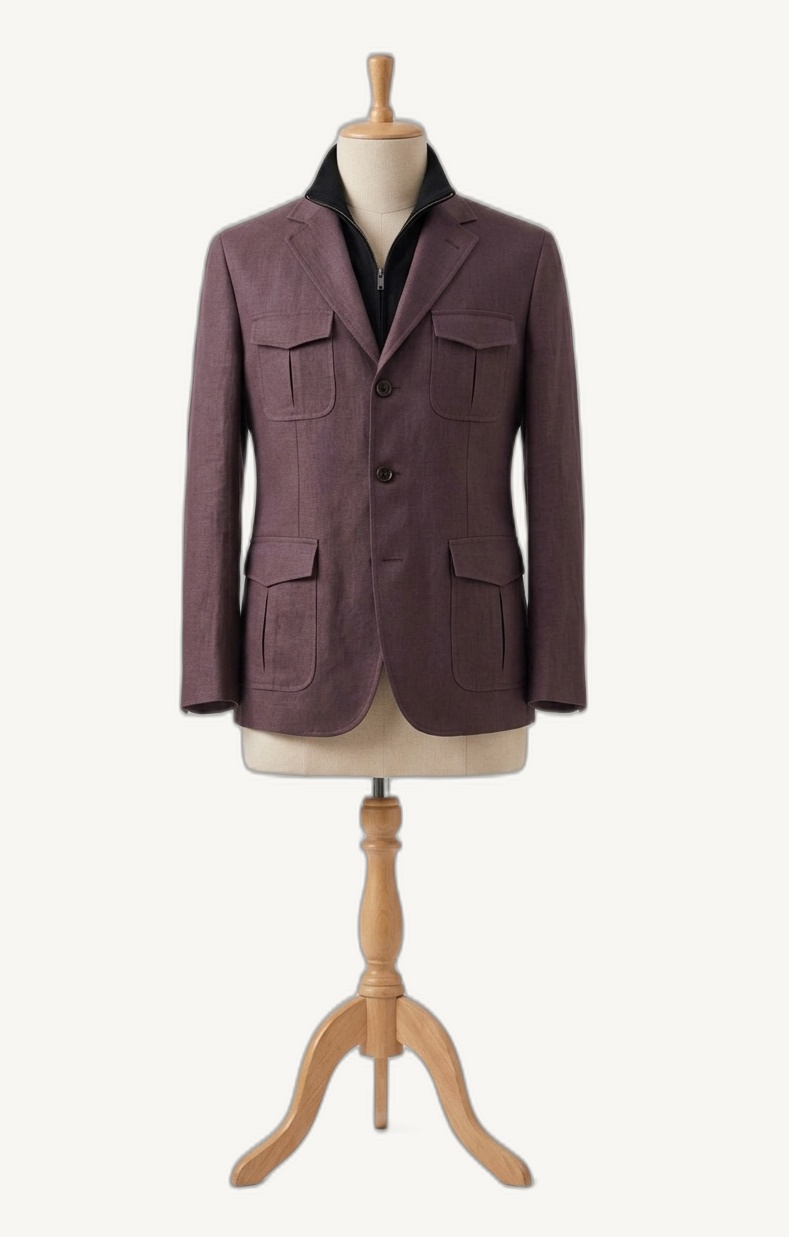
The safari suit sits in its own category. Not quite western, not quite Indian, it is what happens when a formal dress code meets a Chennai afternoon and somebody sensible works out a compromise. In good linen or a fine cotton it stays cool, holds a crisp line, and is perfectly at home across a wide range of professional occasions in South India. The ones we make do not look like costume, and that is the whole point. They look like tailored clothes, because that is exactly what they are.
Where the safari suit came from
It was worked out for hot countries. Take the structure of a western jacket, strip out what the heat makes unbearable, add four patch pockets on the outside, cut matching trousers, and you have it. In India it took hold quickly in government offices, universities and professional life generally, because it did the job of a suit without the misery of wearing one in April.
Made well, it is an elegant thing. Enough structure to read as formal, light enough to survive our weather, and distinctive enough to say something more interesting than another blue suit. Made badly, it looks like a uniform, and everybody can tell. The difference is entirely in the cut, the cloth and the way it is put together, which is the part nobody sees.
How we cut one
We make safari suits in fine linen, in lightweight cotton, in a linen-cotton mix, and where you want more drape, in a light tropical worsted. The jacket keeps a little structure at the shoulder and chest but skips the full canvas of a formal suit jacket, so it breathes and moves with you in the heat. The pockets are practical and clean, usually four of them, sized to suit the weight of the cloth and your build rather than to a fixed formula.
The trouser is cut from the same cloth and cut for comfort in the heat: a slightly higher rise, real room through the seat, and a clean break on the shoe. It comes out professional and easy to wear, and on a hot day it will make you far happier than a badly fitted suit ever could.