
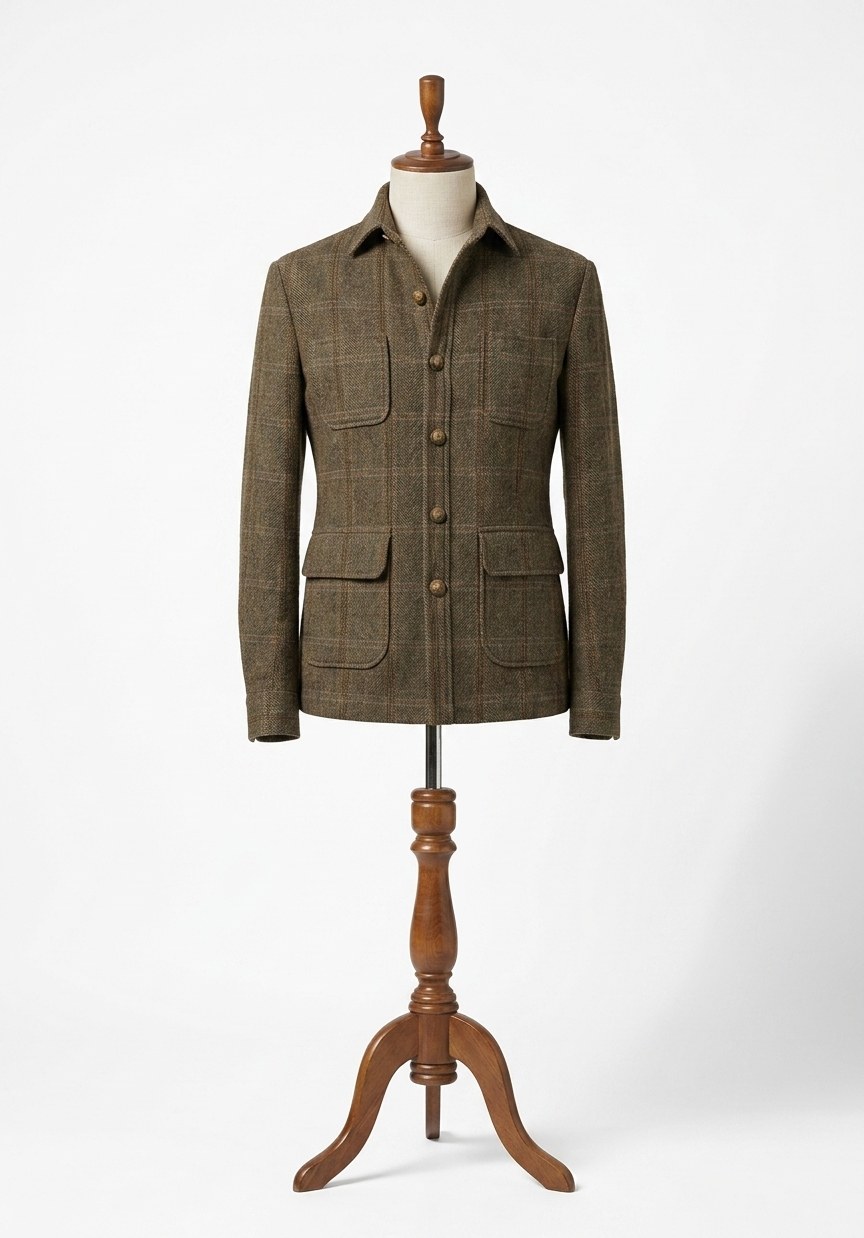
Herringbone gets its name from the little interlocking Vs that run up the cloth, and it is one of the oldest weaves in suiting for good reason. It gives you texture and direction without committing to a stripe or a check, which makes it about the easiest of the patterned cloths to wear. A herringbone suit looks considered rather than decorated, and that is exactly the job good business clothes are meant to do. If you already own a plain charcoal and a plain navy, this is a sensible next step.
How the weave behaves
A herringbone is built on the same twill structure as any other twill, except the direction of the weave flips at regular intervals, which is what produces those V shapes when you lay the cloth flat. The practical effect is that the surface catches light differently from one angle to the next, so the cloth moves slightly as you do. A plain weave just sits there.
In charcoal, a herringbone puts depth into what would otherwise be a flat dark cloth, which makes it a very good second or third suit. In navy it does the same job and stays entirely professional. Take it into brown or tan and the character shifts towards the countryside and the weekend, which is lovely for social occasions and for the more relaxed end of the working week.
For Chennai, a light herringbone worsted in a tropical weight is the one to have. It will carry you through the year. The heavier herringbones, flannel in particular, are worth owning only if you actually use the cool months, and we would rather tell you that now than sell you a suit that lives in the cupboard.