
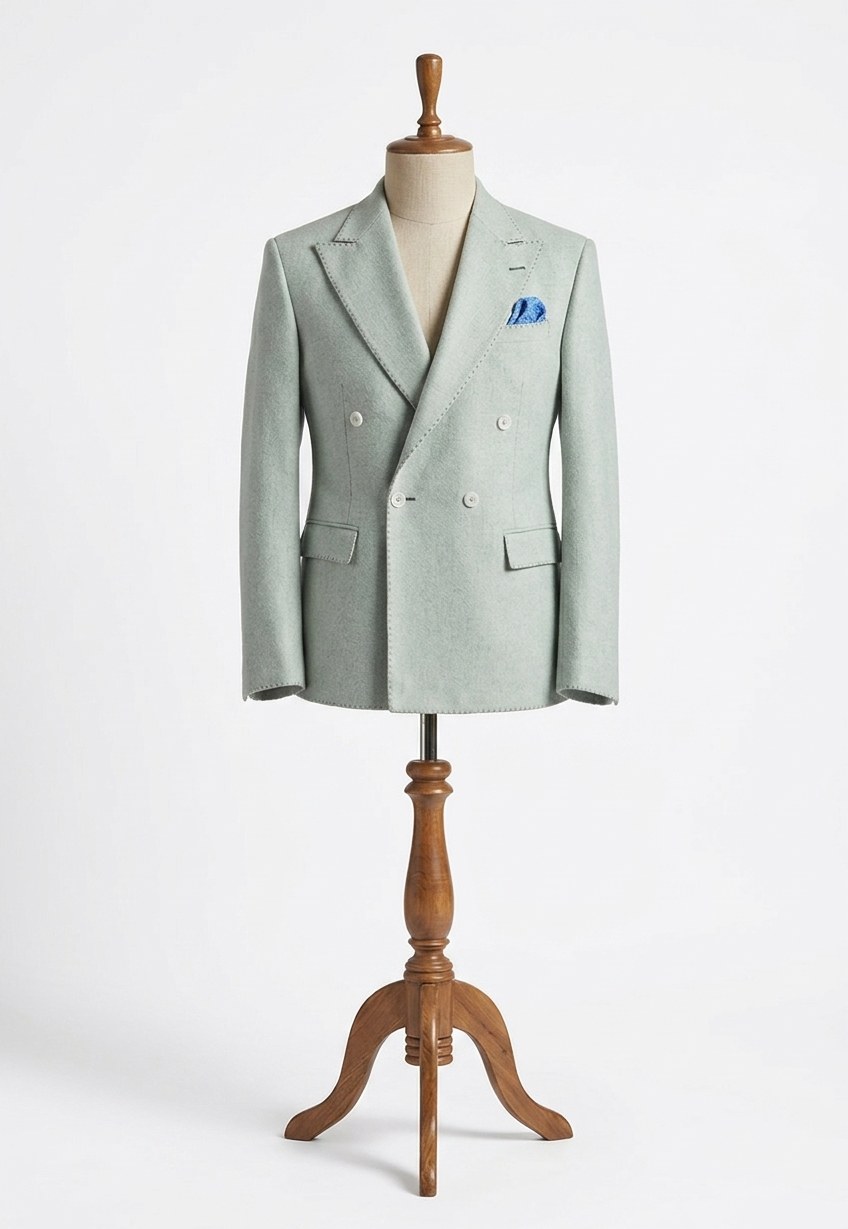
Flannel is not a fibre, it is a finish. The surface of a worsted or woollen cloth is lightly brushed so the fibres lift, and that is what gives flannel its soft, faintly fuzzy handle. What you end up with is weight, warmth and drape together in a way nothing else quite manages. It has been the cool-weather suit of the professional wardrobe for well over a century, and in our short cool season from November to February it is one of the nicest orders that comes across the counter. Be honest about how many weeks you will wear it. If the answer is not many, we will say so.
What flannel is and why the good stuff is different
Flannel was among the first cloths to reach mass-market suiting in the late nineteenth century, once industrial weaving put woven wool within reach of ordinary buyers. But a fine flannel, woven from selected wool and finished carefully by a mill that has been doing it for generations, has almost nothing in common with the flannel-ish suit you find on a high street rail today.
Pick up a good flannel from a heritage British mill, and many of the best still come from the West of England where they have been milling it for centuries, and you feel the difference immediately in the density and the fall. It drops cleanly from the shoulder, takes a crease and keeps it, and softens slowly with wear so it reads as character rather than wear and tear. A five-year-old flannel suit very often looks better than a five-month-old one.
It is heavy, usually 280 to 340 gsm, and it is warm. Between November and February that is exactly what you want. In April it is unwearable, and we will say so at the consultation and point you at a tropical worsted or a fresco for the suit you need to wear all year.