
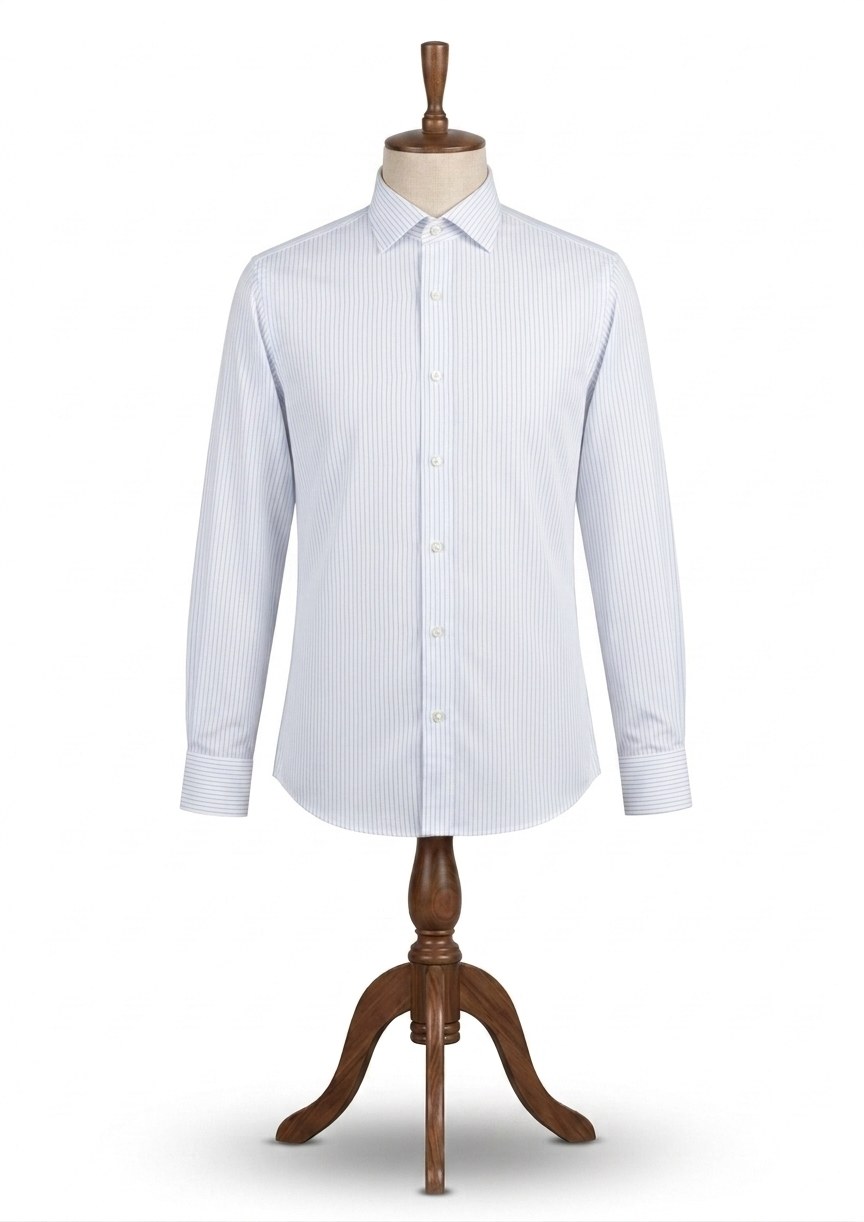
Slim fit has been sold as the modern, flattering default for two decades, and for a great many men it is the wrong choice. The difference between the two is roughly seven centimetres of ease around the body. What that means in practice depends entirely on your build and on how you spend your day.
What actually differs
A slim fit shirt is cut with around 9cm of ease over the body measurement; a regular or classic fit with around 16cm. Slim fits also taper more sharply from chest to waist, have narrower sleeves and a shorter overall body.
Neither is more formal. Both are entirely appropriate for an office. The question is only which one sits correctly on you.
Who slim fit suits
Slim fit works when your chest and waist measurements are relatively close — a lean or athletic build without a significant drop between the two. Worn correctly it looks clean and deliberate, with no excess fabric bunching at the waistband when tucked.
It stops working the moment it strains. If the buttons pull and show gaps across the chest when you sit, or the fabric pulls diagonally from the buttons, the shirt is too small regardless of what the label says. This is the most common styling error we see in Chennai offices.
Who regular fit suits
Regular fit suits fuller builds, broader chests, and anyone whose waist measurement is significantly larger than their chest. It is also the more sensible choice for anyone who spends the day moving — site visits, commuting by two-wheeler, long hours in the heat. Air needs somewhere to go.
The usual objection is that regular fit looks shapeless. That is a fair criticism of regular fit as sold, not of regular fit as worn. Buy the regular fit for your chest and shoulder, then have the body taken in through the waist. You get the room where you need it and the shape where you want it.
The third answer
The genuine answer for many men is neither: buy the fit that is correct at the shoulder and neck, and have the rest adjusted. That is what a tailoring workshop is for, and it is why we keep one under the same roof as the shirt rail.
If you find you are altering every shirt substantially in the same places, your proportions sit outside the standard grades. At that point, having shirts made to your own pattern is usually cheaper over a few years than buying and correcting repeatedly.