
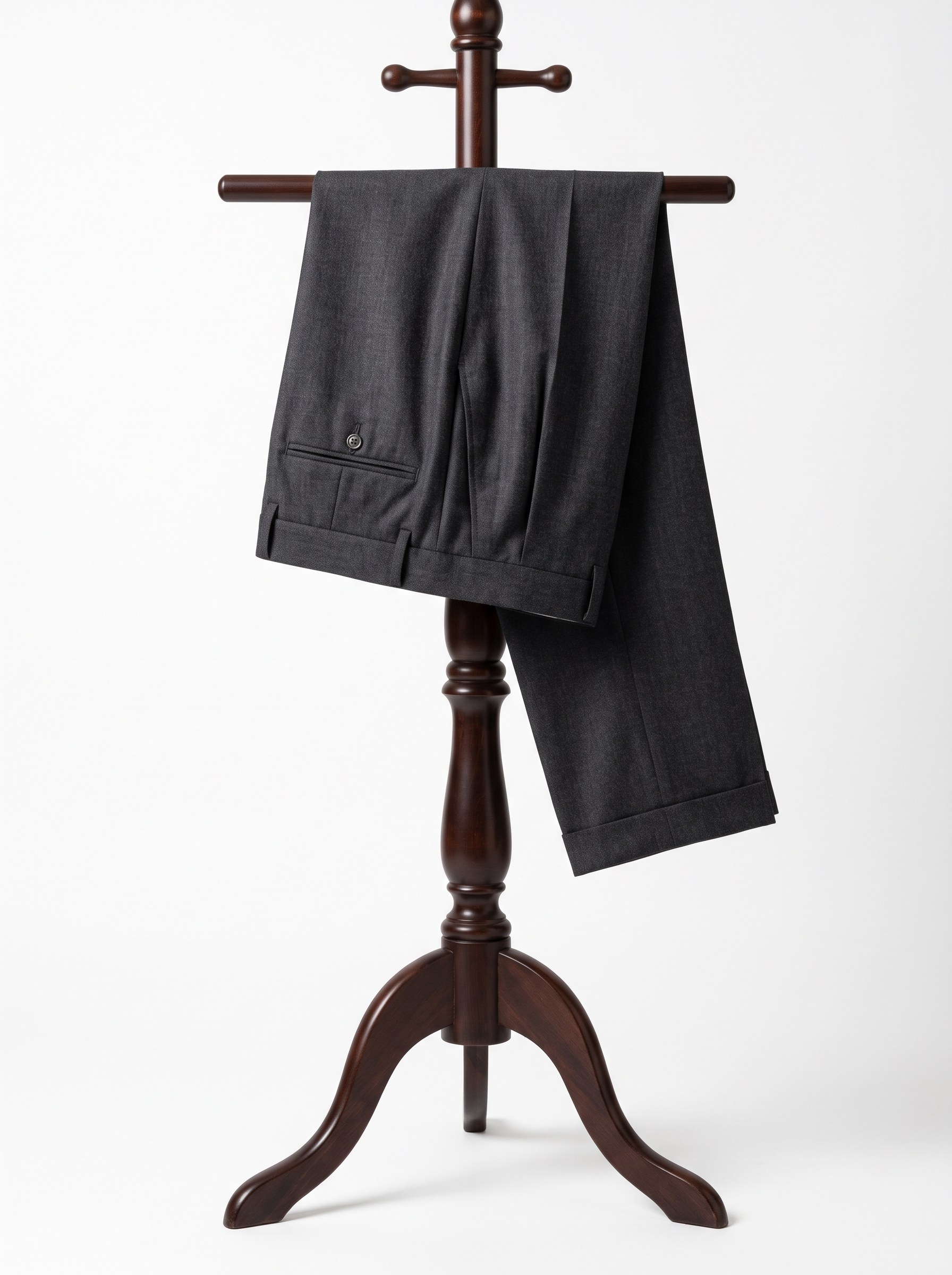
Trousers are the least examined garment in most wardrobes and the one where poor fit is most visible from a distance. Four things decide the outcome, and three of them can be corrected after purchase.
Rise — start here
Rise is the distance from the crotch seam to the top of the waistband, and it determines where the trouser sits on your body. Low rise sits on the hips; mid rise just below the navel; high rise at the natural waist.
For formal trousers, mid-to-high is almost always correct. Trousers that sit at the natural waist stay put when you sit and stand, lengthen the leg visually, and let the shirt stay tucked. A low rise on a formal trouser will drag, bunch and untuck itself all day. This is the measurement to get right in the shop, because altering rise is impractical.
Seat and thigh
The seat should follow your shape without pulling across it or hanging in empty folds beneath it. Horizontal creases under the seat mean it is too tight; a sagging, empty look means too loose.
Through the thigh you want enough room to sit and climb stairs comfortably, without excess fabric flapping. Both seat and thigh can be adjusted, so buy for the waist and the rise and let the workshop refine these.
Taper — the most useful alteration
Most ready-made trousers are cut fuller through the lower leg than modern proportion calls for, particularly for Indian builds. Tapering from the knee down is quick, inexpensive and does more for the look of a trouser than anything else you can do to it.
Do not overdo it. A trouser tapered too aggressively pulls at the calf and rides up when you sit. The leg should narrow gently, not cling.
Break — where it ends on the shoe
The break is the fold of fabric where the hem meets the shoe. Full break: a distinct fold, traditional, currently looks dated to most eyes. Half break: a slight dimple — the safest and most versatile choice for formal trousers. No break: the hem just grazes the shoe, cleanest with a tapered leg and the sharpest modern look.
Always have trousers hemmed wearing the shoes you will actually wear with them. A two-centimetre difference in heel height changes the break entirely, which is why one length cannot serve both your formal shoes and your loafers.