
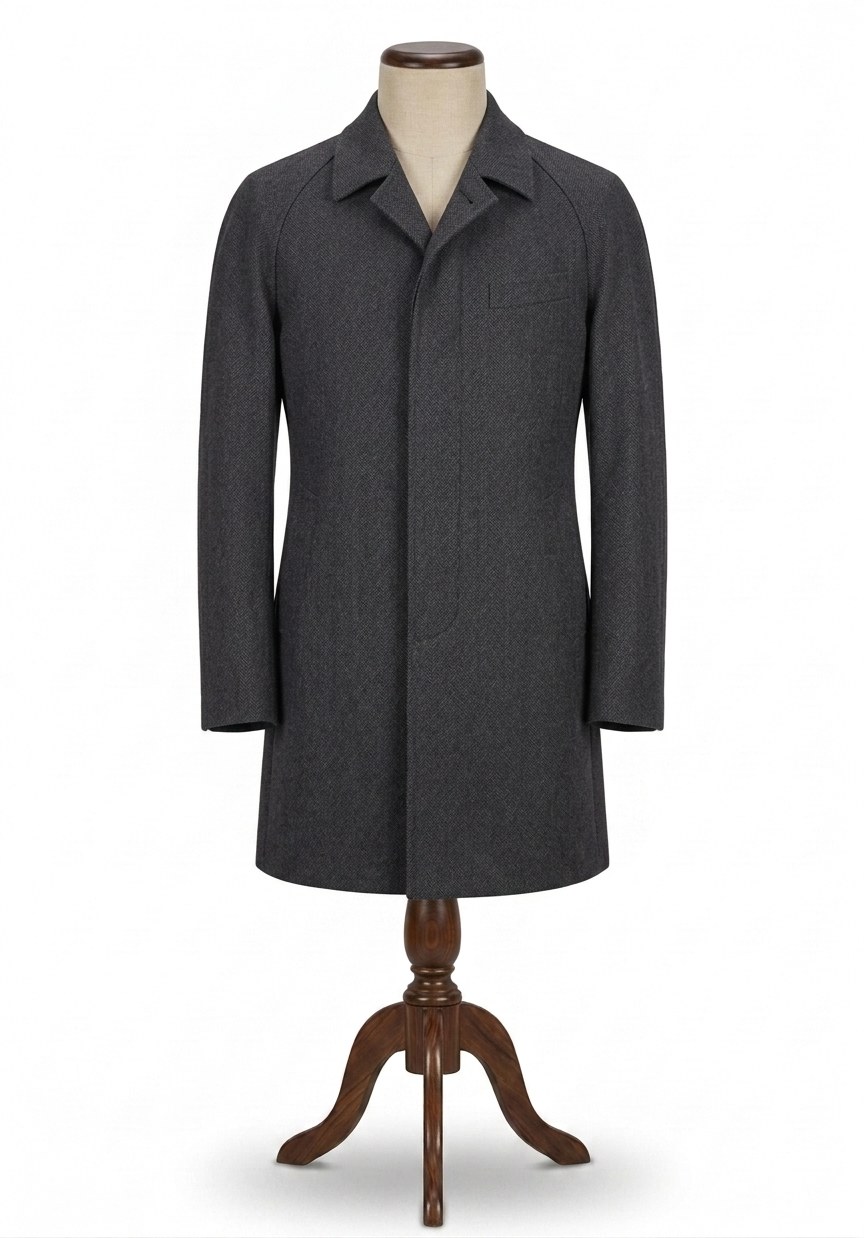
The raglan is named after the first Baron Raglan, who had a coat made with an altered sleeve so he could manage a prosthetic arm after his injury at Waterloo. The sleeve is cut in one piece with the shoulder, joined by a diagonal seam running from the underarm up to the collar rather than set into a shoulder seam. The effect is a coat that lets you move, especially when there are layers underneath. Ask anybody who flies regularly which coat they take and this is usually the answer.
What the sleeve gives you
The whole point of a raglan is freedom of movement. Because the sleeve is part of the coat body rather than set into a separate armhole, nothing catches at the shoulder when you raise or stretch your arms. Over a long journey, whether that is a flight, a train or four hours in a car, the difference in comfort is real rather than theoretical. You notice it most when you are lifting a bag into an overhead locker in a coat.
It is a little less formal than a standard set-in-sleeve overcoat, because that diagonal seam gives the shoulder a softer, rounder look. In a fine wool or a wool-cashmere mix it reads as relaxed but well made. Cut in a travel-weight cloth, it is the most practical coat we make for anyone who is regularly on a plane.