
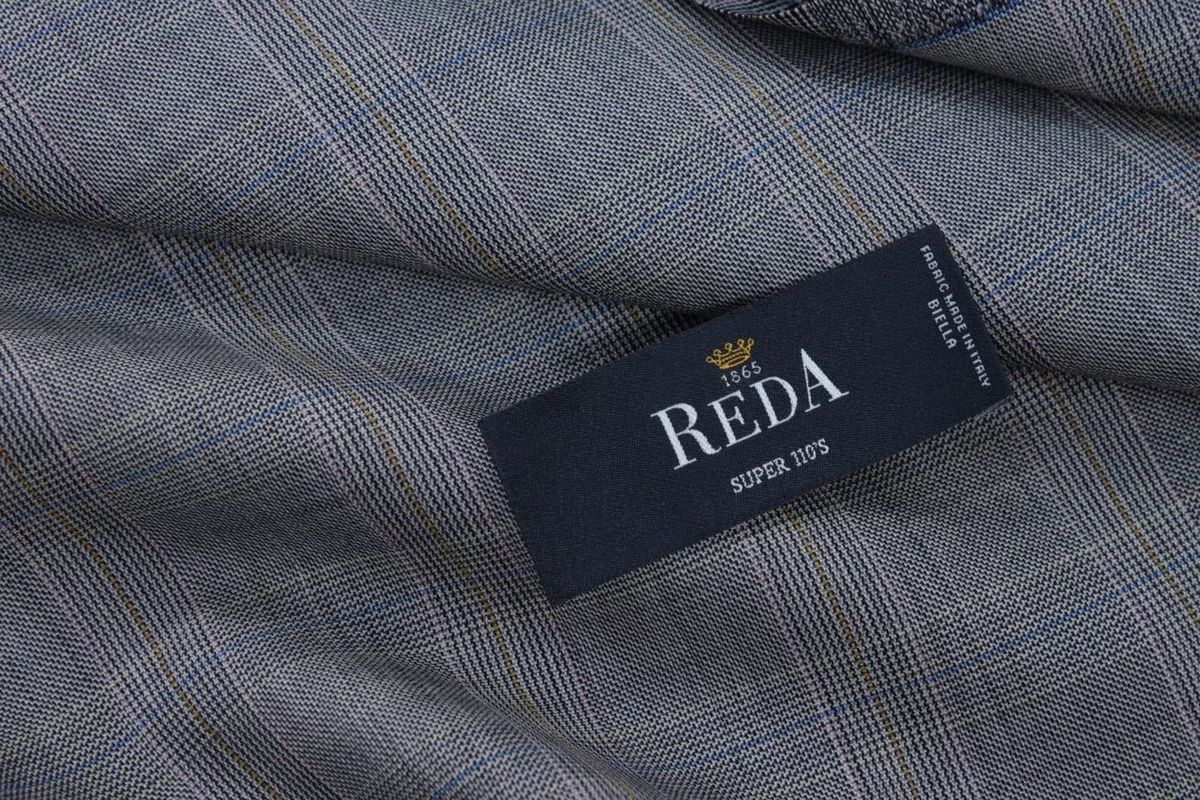
Carlo Reda opened a wool mill at Valle Mosso in the Biella hills in 1865. The Botto family took it over in 1919 and the fourth generation of the Botto Poala family runs it now. What makes Reda unusual is not age, because Biella is full of old mills. It is that they bought three sheep stations in New Zealand and now own the flock their merino comes from. For a customer that translates into something simple and boring and very valuable: the cloth is the same this year as it was three years ago, and they can tell you exactly where it started. Reda is our sensible Italian workhorse.
From Carlo Reda in 1865 to the Botto Poala family today
Reda was founded in 1865 at Valle Mosso, now part of Valdilana, in the Biella province of Piedmont. Carlo Reda started it, his son Giovanni carried it forward, and in 1919 Luigi Botto took over. The company has stayed in that family since, and is currently run by the fourth generation of the Botto Poala family.
It has grown along the way. Reda bought Comero, a woollen mill at Gattinara in the province of Vercelli, in April 2018, and celebrated its 150th anniversary in 2015 with a photography project done alongside Magnum Photos.
The mill is fully vertical, which is the important bit. Wool goes in one end as fibre from their own farms and comes out the other as finished cloth, with the combing, spinning, dyeing, weaving and finishing all under their control.
Three farms in New Zealand, and what traceability is worth to you
Reda own three properties in New Zealand: Otamatapaio, bought in 1993, Rugged Ridges in 1997 and Glenrock in 2003. Together they run to about 74,100 acres and around 30,000 sheep. From 2009 they have also had an agreement with The New Zealand Merino Company to buy raw material from ZQ certified farms.
On the certification side they were the first vertical wool mill in Europe to be awarded EMAS, in 2004, and in 2020 became the first textile company in Italy, and one of the first anywhere, to be certified as a B Corporation.
None of that changes how a suit feels on a Tuesday. What it changes is consistency. When a mill controls the flock, the fleece coming in every season is the same fleece, so a navy you order in three years time will match the navy you ordered this year closely enough to wear the trousers with a different jacket. Anyone who has tried to match a replacement pair of trousers to an old suit knows how rare that is.
Reda 1865, Reda Active and Reda Flexo
The business runs three production lines. Reda 1865 is the classic tailoring cloth, and it is what we stock: fine merino suiting across the practical Super counts, typically in the Super 110s to Super 150s band, in weights that suit a working wardrobe.
Reda Active is technical merino for sportswear and the outdoors, sold largely under the Rewoolution name. You will not be ordering a suit from it, but it explains why the house understands performance wool as well as it does.
Reda Flexo is the stretch line, built around the ROICA V550 polymer. This is the one worth asking about if you drive a lot, sit through long meetings, or simply want trousers that give a little at the knee and the seat. Stretch in a suiting cloth used to mean a compromise in appearance. In a Flexo it does not.
The case for Reda in a Chennai wardrobe
Reda is not the mill you choose to impress somebody who reads bunch labels. It is the mill you choose when you want a suit that behaves. The finish is clean, the colour is accurate, the cloth presses well and holds it, and the price sits below the fine end of the Italian market while giving up very little in the wearing.
For a working wardrobe built over several commissions, Reda in the lighter weights is one of the best value propositions in our cloth room. A navy and a charcoal in the classic line will carry you through most of what Chennai professional life demands, and the Flexo bunches are worth a look for the trousers you live in.