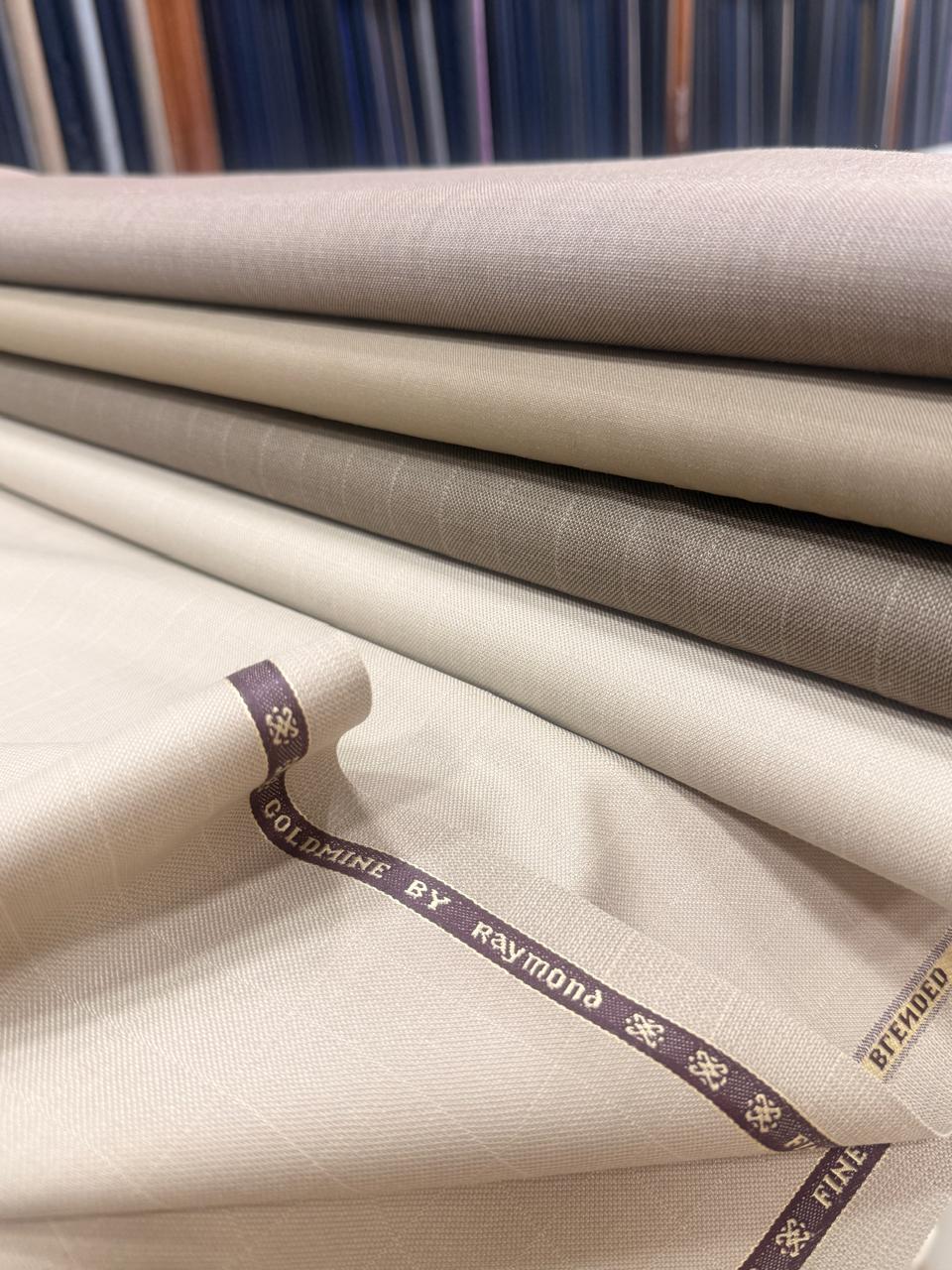
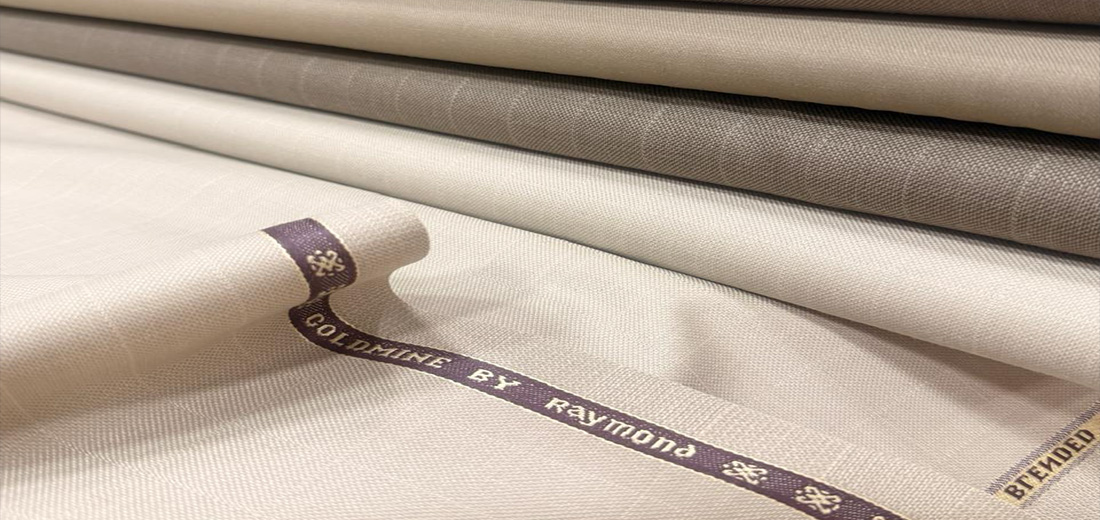
Raymond was founded in 1925 in Thane, Maharashtra, and is now India's oldest and largest integrated wool textile manufacturer, one of very few textile companies anywhere that takes raw fibre through to finished fabric inside a single organisation. Raymond has a clear job on our shelf. It is what we recommend when the right answer is good cloth made in India, priced on Indian production rather than European import, for a customer who needs a proper wool suit rather than an occasion garment in the finest Continental cloth. We would rather sell you the right cloth than the dearest one.
Founded 1925, a hundred years of Indian wool
Raymond was set up in Thane in 1925, in what was then the Bombay Presidency. The textile trade of that era ran on British import cloth, and Raymond represented an early bet that India could build an integrated wool capability of its own that stood comparison with what came off the ships.
In the century since, they have grown into a very large integrated operation. Sorting, dyeing, spinning, weaving and finishing all happen in their own plants, which makes them one of the biggest wool textile manufacturers in Asia.
In 2025 Raymond marked a hundred years of continuous operation. That makes them not just the oldest wool textile manufacturer in India but one of the few Indian manufacturers of any kind to have traded straight through colonial rule, independence, partition, liberalisation and globalisation.
Pure wool and fine suiting, the core of the range
Raymond's main suiting range covers pure wool, merino blends and fine worsted at weights that suit Indian working life, typically 210–280 gsm, which handles both a cold office and the walk back to the car. The Pure Wool range is the workhorse: clean, well finished, and priced honestly for what it is.
Higher up, their Fine Suiting collection uses finer merino in constructions that get close to the entry-level European cloths. This is for the customer who wants good Indian suiting without paying the import premium, for a working wardrobe that will be worn hard and replaced on a sensible cycle rather than kept for a decade.
The pattern range fits the Indian office well: plenty of classic plains and stripes in navy, charcoal and several greys, plus the quiet patterns that business formal wear calls for.
Raymond for ethnic wear, and why it holds a bandhgala
The formal Indian garments, the bandhgala, the Nehru jacket, the Jodhpuri, ask something specific of the cloth. They need structure to hold that sharp standing collar and the close-fitted front, weight to give the silhouette presence, and a finish that lets the tailor press those long clean lines flat.
Raymond pure wool in medium weights is one of the best cloths available for this at a sensible price. The way the wool is woven lets our tailors press the collar, the front stand and the shoulder seams to the sharpness these garments demand. A bandhgala cut here in Raymond pure wool looks made, not assembled.
For a wedding where several garments are needed, a sherwani for the muhurtham, a bandhgala for the reception, a Nehru jacket for a third function, Raymond for the secondary pieces and a finer imported cloth for the main one is often the smartest way to spend the budget. We will sit down and work that out with you.
The honest case for Indian cloth
We stock Raymond because not every suit needs imported European cloth, and because telling you what actually suits the job is more useful than pointing at the most expensive bunch on the shelf.
Take a working suit that will be worn most weeks for five years and then retired. That is a Raymond commission, and there is nothing second-rate about it. The bespoke work does not change: the pattern still comes off your measurements, you still come back for fittings, the finishing is still done by hand. You get a suit that fits you and is made right, in cloth that suits the purpose and is priced fairly.
We will tell you straight whether Raymond is right for what you have in mind. Often it is exactly right. Sometimes the step up to VBC or Holland & Sherry is money well spent, and we will say that too.