
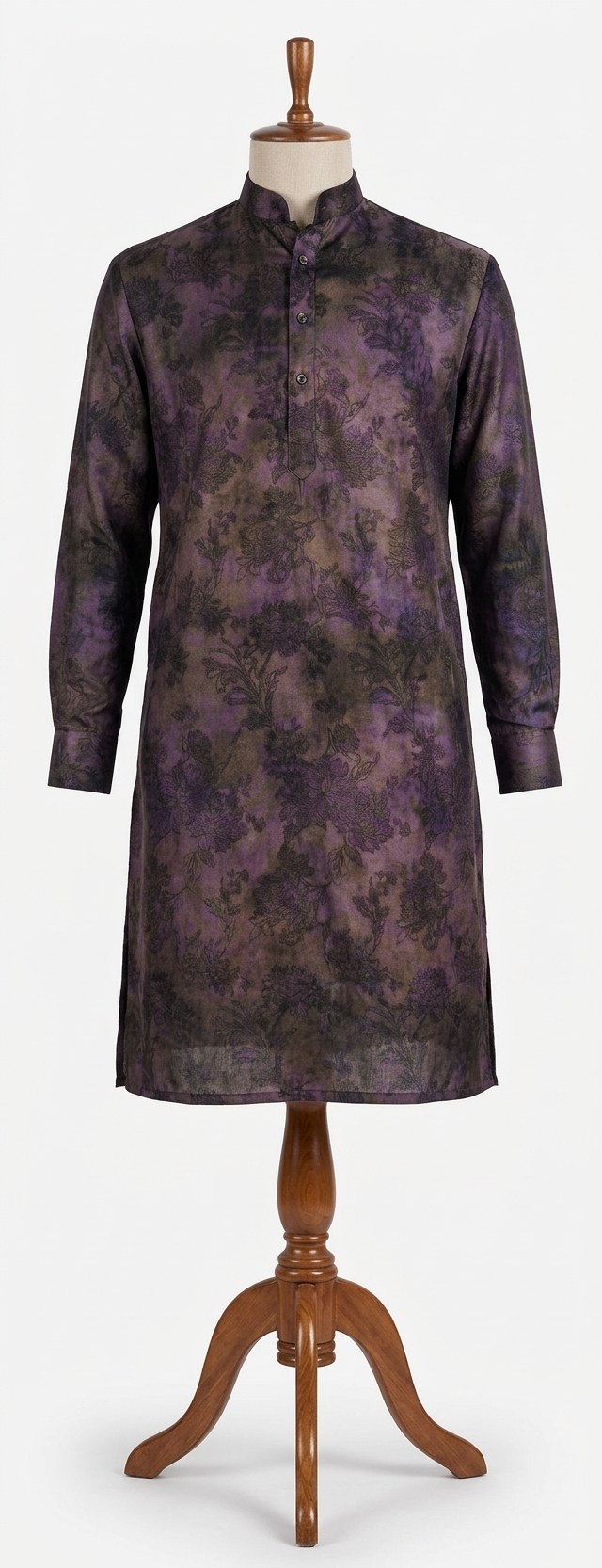
A silk kurta isn't just a kurta in a different cloth. The weight, the fall, the sheen and the hand of silk change what the garment is: what reads as relaxed everyday wear in cotton becomes, in a good silk, something you'd wear to the most important evening of the year. A silk kurta cut for you at Sellers in raw silk, Tussar or fine plain silk is the base layer of a wedding outfit, the standalone piece for Diwali or Eid, and the thing a well-dressed man reaches for when the occasion is worth the effort. Buy the right one and it'll outlast four rushed purchases.
Silks for kurtas: raw silk, Tussar, mulberry and blends
Raw silk, sometimes sold as wild silk or as dupion depending on who you ask, keeps more of the natural gum, the sericin, than processed silk. That gives it a slightly crisp hand and its characteristic slub, the uneven thread that scatters small variations across the weave. A raw silk kurta looks natural and hand-made close up and simply rich from a distance, which is why it works from a semi-formal lunch right through to a formal evening.
Tussar silk, also called Kosa, comes from the forests of Jharkhand, Chhattisgarh and Odisha, spun by wild silkworms feeding on forest trees. Undyed it carries a golden-brown or honey tone, and its hand is rougher and lightly textured. A Tussar kurta has a strong regional character and an honesty about it that connects straight back to Indian weaving traditions.
Mulberry silk, smooth and lustrous, from domesticated silkworms, gives a completely different kurta: sleek where raw silk and Tussar are textured. In a plain weave or a fine twill it's the most refined and most formal of the three. An ivory mulberry silk kurta under a brocade bandi or a sherwani is about as far as Indian occasion dressing goes.
Colour, occasion by occasion, through the year
Ivory, cream and off-white are the workhorses. They sit under any coloured bandi or sherwani, they stand alone at less formal functions, they photograph well, and they're correct in any region and any community, which is more than you can say for most colours in this country.
For Diwali, go richer: gold, champagne, warm amber, deep saffron, marigold. Those are the colours of the festival and a silk kurta in a deep gold or a rich amber is hard to beat. For Eid, white and off-white are traditional and right. For Onam, cream or white with a gold border, usually a narrow zari at the hem and cuff, is the Kerala choice. As a wedding guest, any rich colour works. If the family has set a palette for the day, ask them, and we'll match the cloth to it.
Looking after silk, and why one good kurta beats four bad ones
Good silk, looked after, lasts decades. Hand-wash in cold water or send it for dry cleaning, press on the reverse with a cool iron, store it in a muslin bag away from light and damp, and a well-made raw silk or mulberry kurta will still look right after years of festive wear. Set that against the alternative, which is replacing a mediocre ready-made silk kurta every couple of seasons because it never fitted and it never lasted.
We go through the care instructions with you at handover. Most of our silk kurtas take a gentle hand-wash in mild soap at room temperature. Tussar is the exception and needs dry cleaning. Chennai's humidity is the real enemy here, so we'll also sort you out with a garment bag and tell you where in the house to keep it between occasions.