
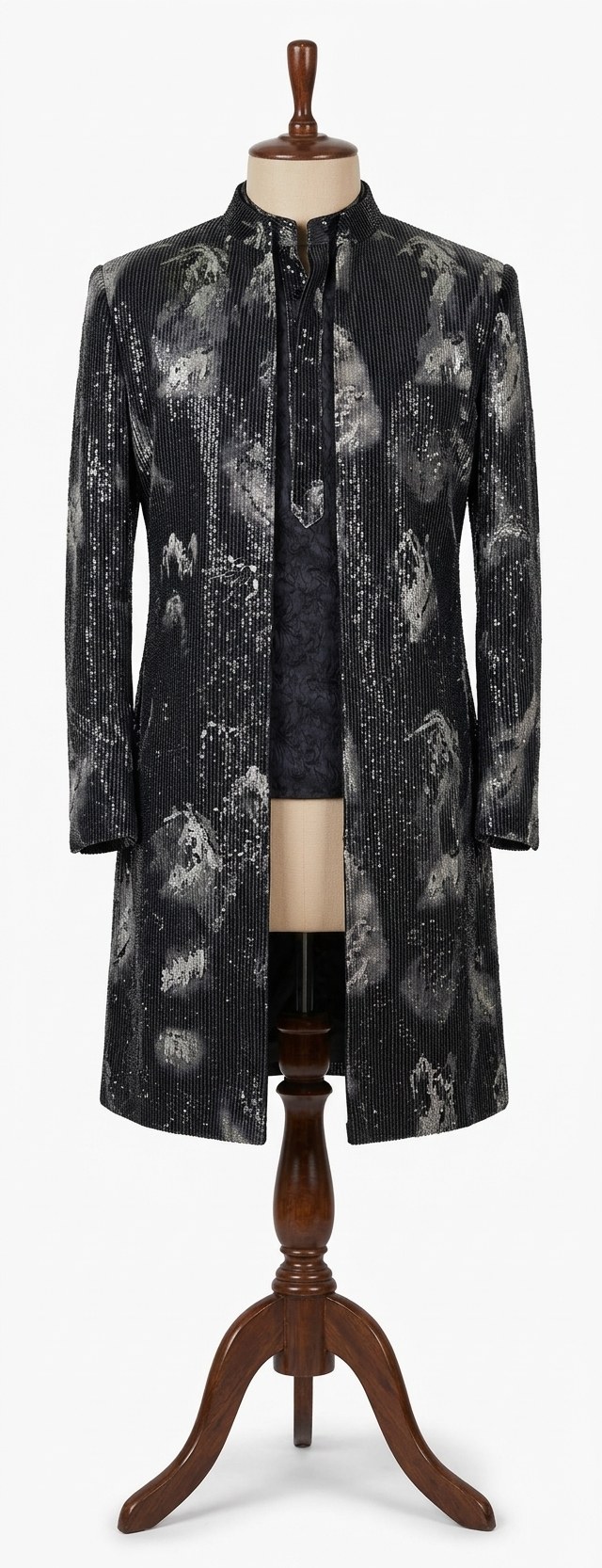
Silk has dressed Indian ceremony for three thousand years and more. The sherwani, the wedding kurta, the ceremonial bandhgala all reach their best in it. But silk isn't one cloth. Mulberry and Tussar differ as much as poplin differs from tweed, and a silk that's perfect for a flowing kurta will fight you in a structured jacket. Knowing which silk suits which garment and which occasion is where a good commission starts, and it's the conversation we have with customers across the counter every week.
The silks used in Indian ethnic wear
Indian ethnic wear draws on a remarkable spread of silks, each with its own character and its own regional home. Mulberry silk, smooth, lustrous and even, is the most formal and the most widely useful; its even surface takes dye deeply, which makes it the right ground for a plain silk kurta or for embroidery to sit on. Tussar silk, or Kosa, brings a warm golden tone and a natural texture out of the forests of central India. Raw silk, with its slub and its half-crisp hand, bridges the formal and the hand-made. Banarasi silk, woven on Jacquard looms in Varanasi with gold and silver zari patterning, is the most ornate of the lot and the most openly ceremonial.
Looking after silk in a Chennai house
Silk asks for more care than cotton or suiting wool. Most mulberry and raw silk garments take a hand-wash in cool water with a mild detergent and a press on the reverse with a cool iron. Tussar and anything heavily worked should go to a dry cleaner instead. Never wring silk. Roll it in a clean towel to take the water out, then hang it to dry in the shade, because direct light will pull the colour out of it faster than wear ever will.
For a garment you'll wear two or three times a year, a wedding sherwani, a Diwali kurta, get it professionally cleaned before it goes away and store it somewhere cool, dry and dark. A few neem leaves in the bag will keep insects off. That's the whole routine, and it's the difference between a sherwani you can wear at your brother's wedding in six years and one you can't.