
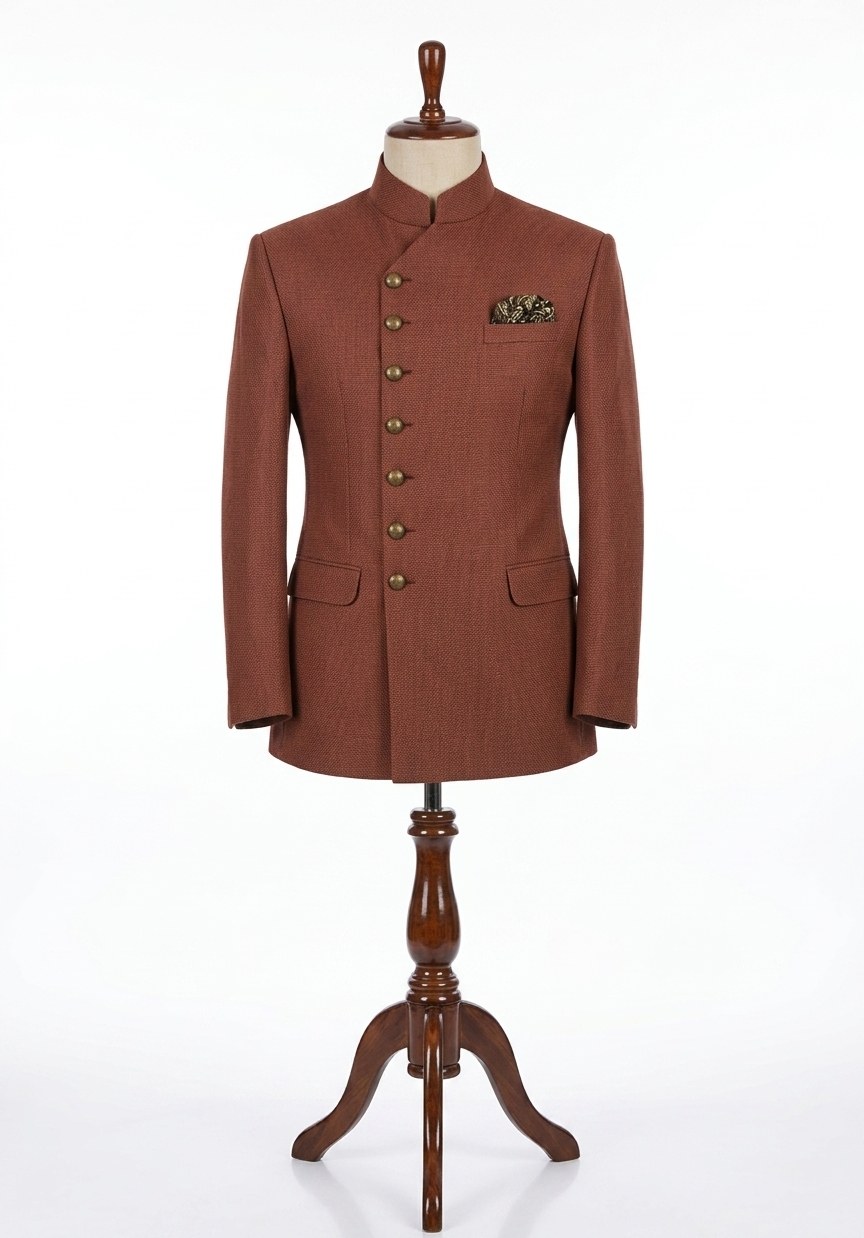
Not every function around a wedding calls for a sherwani. The reception, the sangeet, the mehendi, the family dinner the night before, each has its own expectations, and the bandhgala covers the whole spread simply by changing cloth and the amount of work on it. Raw silk for the sangeet, a fine suiting for the reception dinner, brocade for the main ceremony if the sherwani is being saved for the pheras. We cut wedding bandhgalas at Sellers with the specific function in mind, which is why we always ask you which one it's for.
Matching the bandhgala to the reception
Indian receptions run from thirty people around a table at home to five hundred in a hotel ballroom, and the right bandhgala is not the same for both. For the small family dinner, a fine raw silk or a good handloom cotton in a rich colour puts you correctly dressed without looking like you've overshot the room. For the big hotel reception, a silk or fine suiting jacket in a jewel tone with a little embellishment works better, because at that scale the garment has to read from thirty feet away, not from three.
Dressing for four days of functions: plan the set at once
An Indian wedding often runs three to five days with several distinct functions: mehendi, sangeet, baraat, pheras, reception, and daytime events on top. The groom and the close family need something different for each. Plan them together and you get a coherent set of outfits. Buy them one at a time under pressure and you get five unrelated garments and at least one you'll never wear again.
A sensible plan for a groom covering the main functions: a sherwani for the pheras, an achkan or a good bandhgala in a rich colour for the baraat, a kurta and bandi for the mehendi, a lighter Nehru jacket or kurta for daytime, and a formal bandhgala or Jodhpuri for the reception. Bring the whole list to us in one visit. We'll coordinate the colours, the cloth weights and the formality levels across the set, and we'll tell you where you can reuse a piece instead of buying another.