
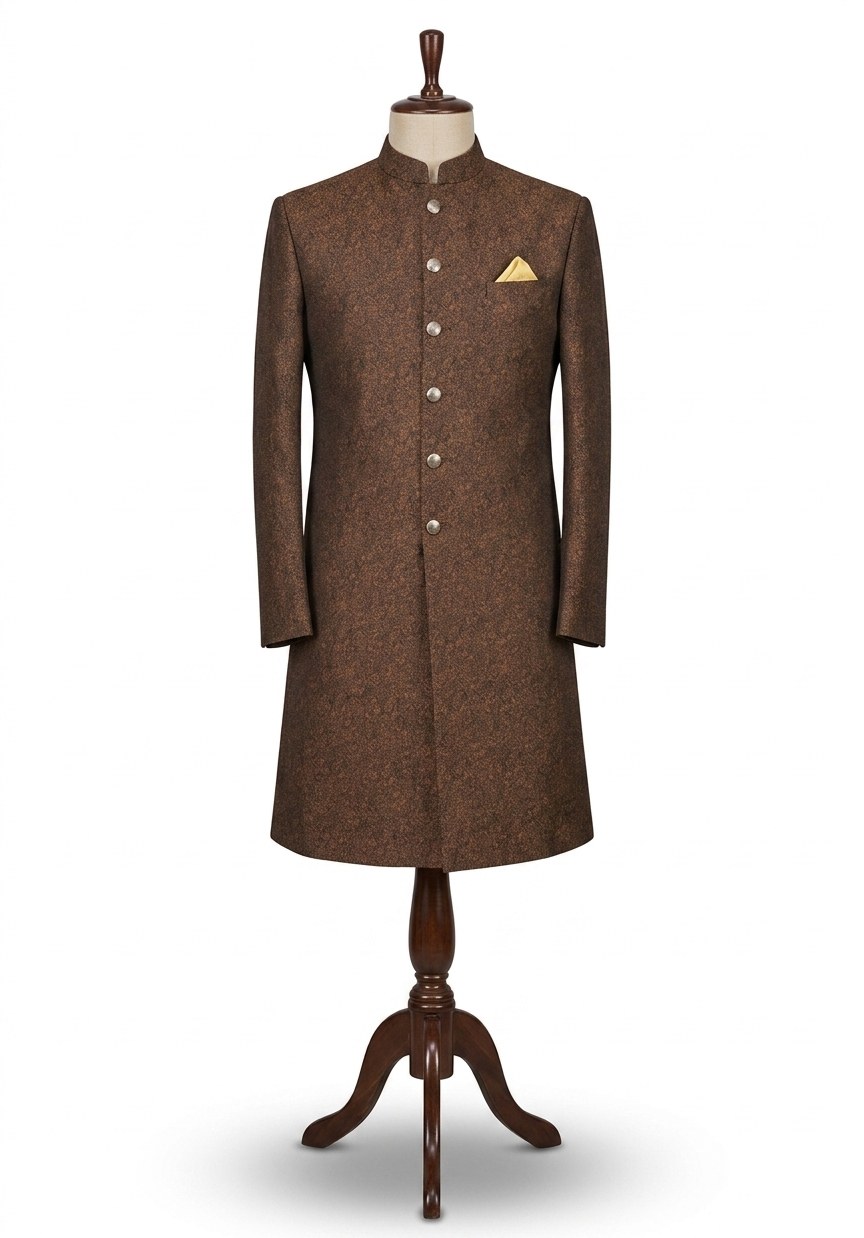
Raw silk, sold variously as wild silk, spun silk, or just raw depending on which shop you're standing in, is woven from fibre that keeps more of its natural sericin gum than processed mulberry silk. You get a slub texture from the irregular thickenings in the thread, a slight firmness in the hand, and a matte or half-matte surface rather than a high shine. Raw silk kurtas and bandhgalas look deliberately natural, and that's the appeal: they say the wearer chose character over sparkle. It's the cloth we sell most of, and there's a reason for that.
How to judge raw silk: the slub and the hand
The slub, that irregular thickening in individual threads, should be spread fairly evenly across the cloth and be moderate in size. Very large slubs look like a fault rather than a feature. No slub at all means you're looking at something more processed than true raw silk. Good raw silk for ethnic wear shows its slubs when you get close and simply looks deep and textured from a distance.
The hand should be slightly firm. It ought to have body and hold a shape when it's draped, not fall away like a soft processed silk. That firmness is exactly why raw silk suits structured garments, bandhgalas and Nehru jackets that need to keep their form through an evening. For a flowing kurta, where you want fall rather than structure, ask for a finer or more lightly processed raw silk instead of a crisp, stiff one.
Where raw silk belongs, occasion by occasion
Raw silk lives in the semi-formal to formal band. It's a step up from cotton for anything where festive dressing is expected, and a step down from Banarasi brocade or heavy embellishment. A raw silk bandhgala in ivory or cream will carry you through a wedding as a guest, through Diwali, through a formal work function, and through a government or diplomatic evening where Indian formal dress is the expectation.
The natural colours of raw silk, warm creams, honey, natural ivory, do something particular in Chennai light. They have a warmth that a bright white or a cool blue loses in strong sun, and they sit more comfortably against South Indian skin tones than the stark whites and cool greys of North Indian formal dress. Try one at the window in the shop before you commit; the difference is obvious in daylight and invisible under tubelight.