
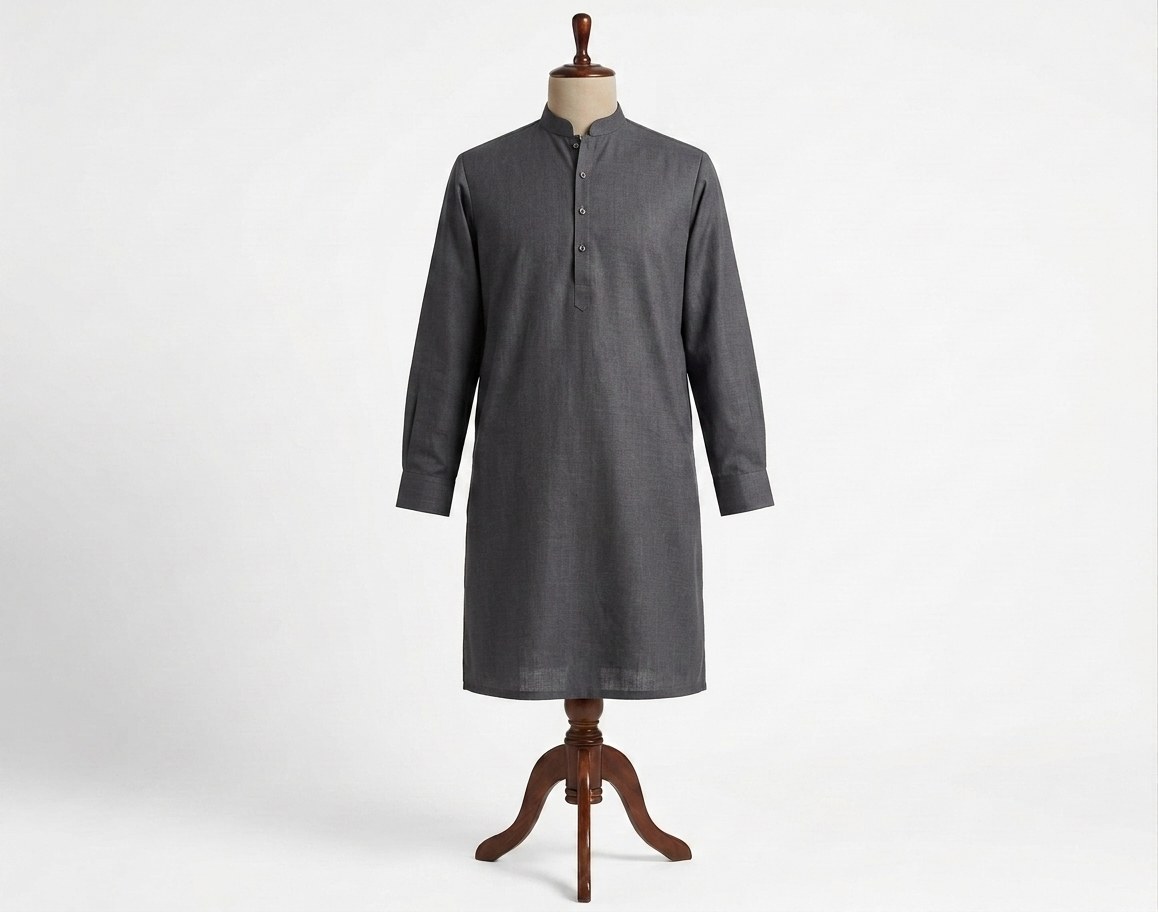
The Pathani suit, a wide-cut kurta over a loose salwar, is the most comfortable formal thing in Indian menswear. It came out of the Pashtun north-west and has been taken up across India for Friday prayers, for Eid, and for any occasion where the close fit of a bandhgala or even a kurta-churidar would be more discipline than the day deserves. Made at Sellers in cotton, fine cotton blends or a light wool, with the proportions of both the kurta and the salwar set at the fitting so they suit your height and your build rather than an average of everyone's.
Relaxed, dignified, unstructured: what the Pathani suit is
Freedom of movement is the whole idea. The kurta is wide and flowing, far more generous than a standard kurta, with full sleeves and a hem that reaches the knee or drops past it. The salwar matches that generosity, full through the seat and thigh and tapering gently towards the ankle. Nothing is fitted, and nothing is meant to be.
That makes it the sensible choice whenever an occasion demands formality but also demands endurance: a long religious ceremony, a full day of family visits, an outdoor function in May when anything fitted becomes punishment. You look like you have dressed for the occasion, and you can still sit through four hours of it.
Occasions for the Pathani suit, and when it is right
It's the standard Eid outfit across India, particularly for men who want to be well dressed through a day of prayer, visiting and eating without feeling constrained by any of it. A white or cream Pathani suit in fine cotton, freshly pressed and cut to fit, is a very elegant thing to wear for Eid, and it's formal, comfortable and traditional all at once.
Away from religious occasions it works for casual Fridays wherever ethnic wear is welcome, for mehendi and haldi functions where you want to be dressed properly without a fitted suit, and for anyone who simply prefers a flowing silhouette to a tailored one. Plenty of our older customers wear nothing else at home.
Cloth and construction: how we make them at Sellers
The traditional cloth is a fine cotton in white, off-white or an undyed natural tone. For Chennai the right weight sits around 70 to 90 gsm: light enough to stay cool outdoors, substantial enough to hang properly instead of clinging. A fine mul cotton or a handloom cotton in a natural weave gives you the drape the Pathani silhouette depends on, and it only improves after a few washes.
Beyond white and natural, solid colours have become common as the cut has moved beyond its religious associations: a deep teal, a warm terracotta, a muted olive. These are right for casual-formal occasions and they add some character to a wardrobe that might otherwise be all fitted garments. We keep a few of these ready-made as well, and our own tailors take them in for you.