
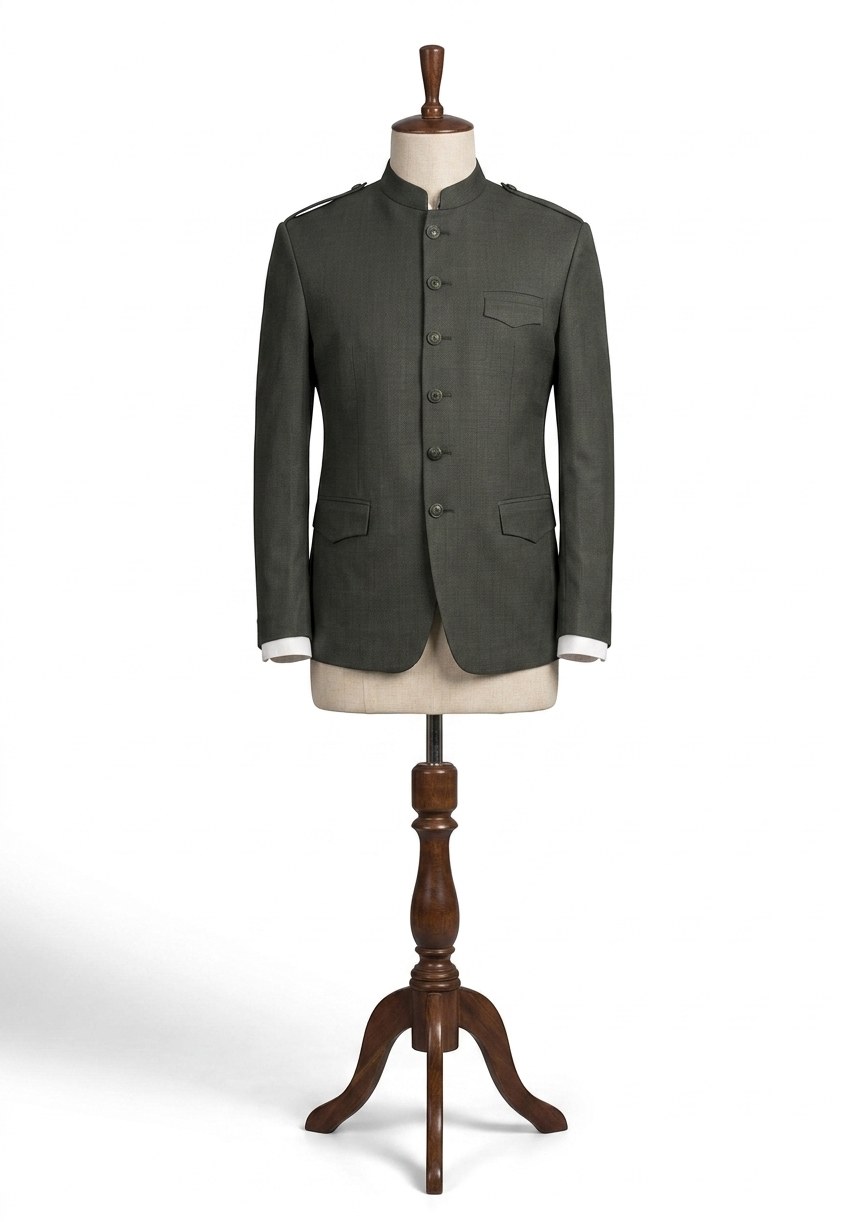
Indian menswear is in an interesting phase. The sherwani, the bandhgala and the kurta are all being reworked for a different kind of customer: shorter lengths, quieter palettes, cleaner construction with far less work on the surface, and combinations nobody would have put together twenty years ago. We make both versions at Sellers, the classical and the contemporary, and a large part of the consultation is working out which one suits the man in front of us and the life he's actually dressing for.
Where Indian menswear is heading now
The biggest shift is towards restraint. A generation ago, more embroidery meant a better garment, and price tracked thread count. Today the taste runs the other way: a beautifully woven cloth with no work at all, or a single band of embroidery at the collar and cuff instead of an all-over pattern. Some of that is global minimalism arriving here, but a lot of it is a more confident Indian eye deciding the cloth and the cut are worth more than the decoration on top.
Colour has moved too. The old ivory-gold-red palette now shares the floor with dusty rose, sage, slate grey, powder blue and champagne. These sit especially well in the newer cuts, shorter sherwanis, closer-fitting bandhgalas, Nehru jackets in semi-structured cloths, and they produce outfits that look Indian and current rather than pinned to a particular decade.
Why the cleaner styles need better fitting, not less
Contemporary ethnic wear is less forgiving, not more. Heavy embroidery hides a multitude of fitting sins; a clean sage-green raw silk bandhgala hides nothing at all. It stands entirely on its cut, its balance and the line of its shoulder. Half a centimetre too wide across the back or a waist left unshaped and the same garment stops looking modern and starts looking undefined, and nobody in the room will be able to tell you why they don't like it.
We approach the contemporary work exactly as we approach the classical: find out what you want the clothes to say, then build them to say it. The fittings matter more here, not less, because there's no ornament to fall back on and nowhere for a mistake to hide. If you want the minimal version done well, give us the extra fitting and give us the time to do it. That is the whole difference between clean and plain, and it is not a difference you can buy off a rail.