
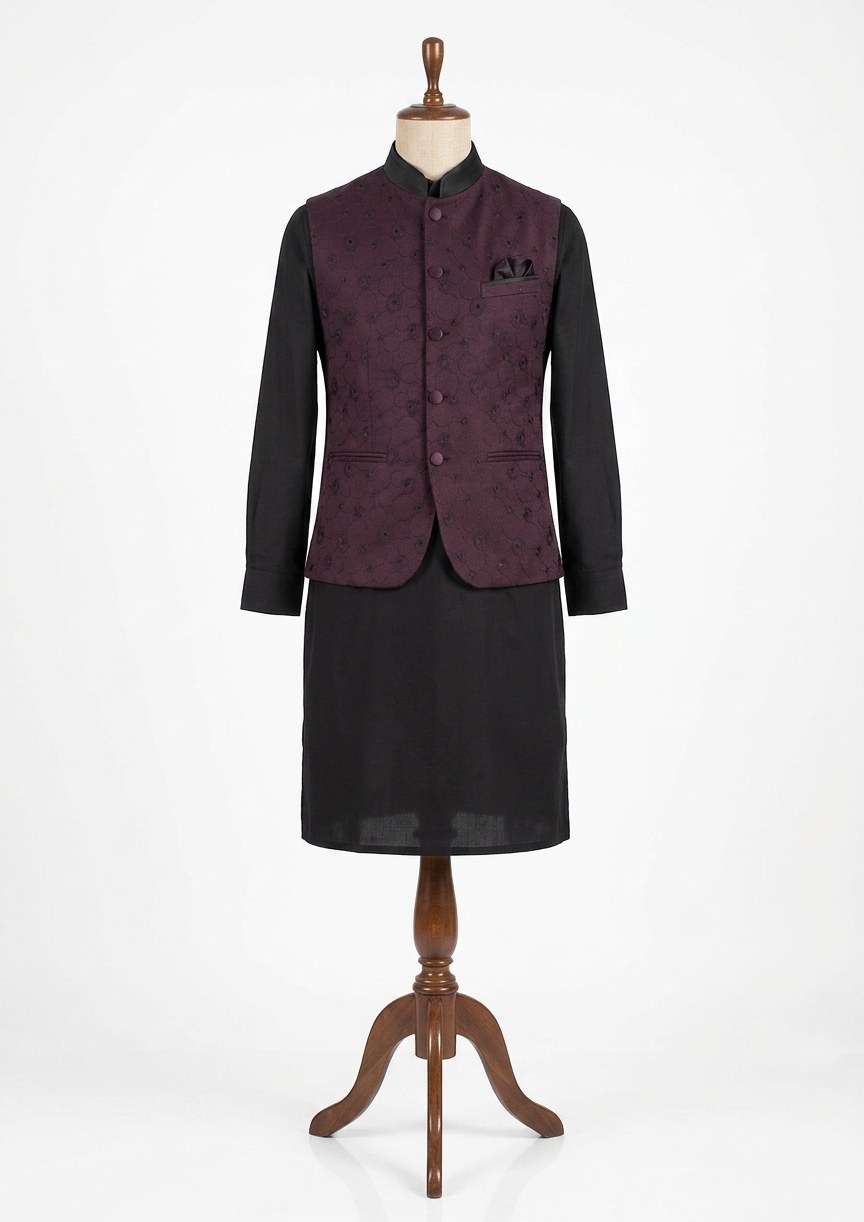
India's festivals ask for very different things. Onam has its own formal grammar around the sadya. Diwali wants colour and light in the evening. Eid begins with prayer and dignity and turns into a day of visiting. Pongal is a harvest thanksgiving with dress codes that go back generations in Tamil households. Each one has its own tradition, and knowing what it asks for is the difference between being dressed correctly and just being dressed festively. Our customers in Adyar celebrate most of these across a single family, sometimes in a single week.
Festival by festival: what each one asks for
Diwali in Chennai is an evening festival, so dress for celebration rather than solemnity. A silk or Chanderi kurta in a warm colour, gold, amber, saffron, deep burgundy, with a churidar and a bandi if you want one, is the standard and the best answer. The mood allows more colour and more personality than a ceremonial occasion would. Pongal is South India's harvest festival and holds its dress traditions firmly: a white veshti with a gold kasavu border, a matching shirt or an angavastram, is the Tamil dress for the day. Plenty of people wear Western clothes for Pongal too, but traditional dress is what the occasion is actually for. Eid: white kurta with a salwar or churidar in most Indian Muslim communities. A crisp white cotton Pathani suit or a white kurta and churidar, pressed and correctly sized, is the standard and the most respected choice. Onam: the white kasavu mundu with its gold border and a matching shirt is the Kerala dress. The mundu is tied differently from a North Indian dhoti, and the angavastram over the shoulder completes it.
Planning a whole year of festival clothes
The dates don't move much, so there's no excuse for being caught out. Ordering one or two festive garments a year, instead of buying something in a hurry the week before each festival, costs less over five years and looks considerably better in the meantime. A silk kurta ordered in August is fitted, finished and washed once before Diwali arrives in October, which is exactly how it should be.
A sensible year for a man in Chennai might look like this: a white or off-white Pathani suit or kurta for Eid; a gold or amber silk kurta with a bandi for Diwali; a kasavu mundu set for Onam or Pongal if that's your family; and one or two more kurtas in different cloths for the run of parties and visits that come with each season. Order them at Sellers off the same pattern where we can, and each one after the first costs you less time and less money.