
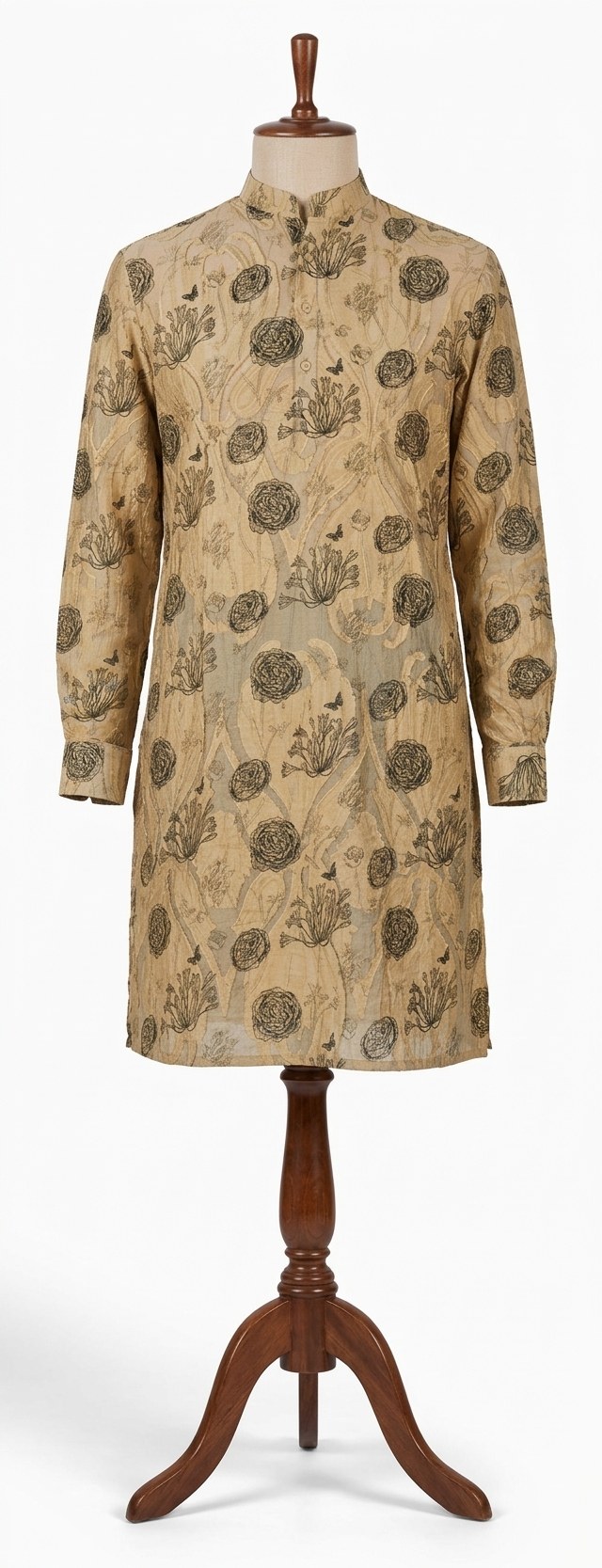
Chanderi is a handwoven cloth from the town of Chanderi in Madhya Pradesh, made in cotton, in silk, and in silk-cotton blends. It's light, faintly sheer, and it carries a natural lustre from the silk in the weave. They've been weaving it there for five centuries and the Mughal court favoured it. For us in Chennai it solves a real problem that heavier festive cloths never will: it stays cool on the body while still looking like something you dressed up in.
The three Chanderis: cotton, silk and the blend
Pure silk Chanderi has the most lustre and the most formal register. Silk-cotton Chanderi, woven with a silk warp and a cotton weft, is a little more matte and noticeably more breathable, which makes it the better bet for a morning function outdoors. Pure cotton Chanderi is the most relaxed and the coolest of the three, and it makes an everyday kurta that still looks a cut above.
What identifies the cloth is the buti: small woven motifs in a contrasting thread, often zari, scattered across the ground. A Chanderi kurta with small gold butis on cream is about the most elegant warm-weather festive thing you can wear. The silk warp gives you the shine, the butis give you the occasion, and the weight keeps you comfortable through a Chennai afternoon.
Chanderi in menswear: kurtas, bandis and the right occasions
Chanderi works best for men as a kurta or a bandi rather than as a full sherwani. It's light and slightly sheer, which suits a garment worn over a base layer far better than it suits a structured outer coat. A Chanderi kurta in ivory or cream with a buti pattern, over a silk churidar, is close to ideal for Diwali, for a morning wedding function, or for anything held outdoors in this climate.
Care is the same as for silk: hand-wash cool with a mild detergent, iron on the reverse at low heat. One honest warning, though. It's a light weave and it creases faster than heavier cloth, so if you're facing a four-hour ceremony followed by photographs, factor that in before you choose it.