
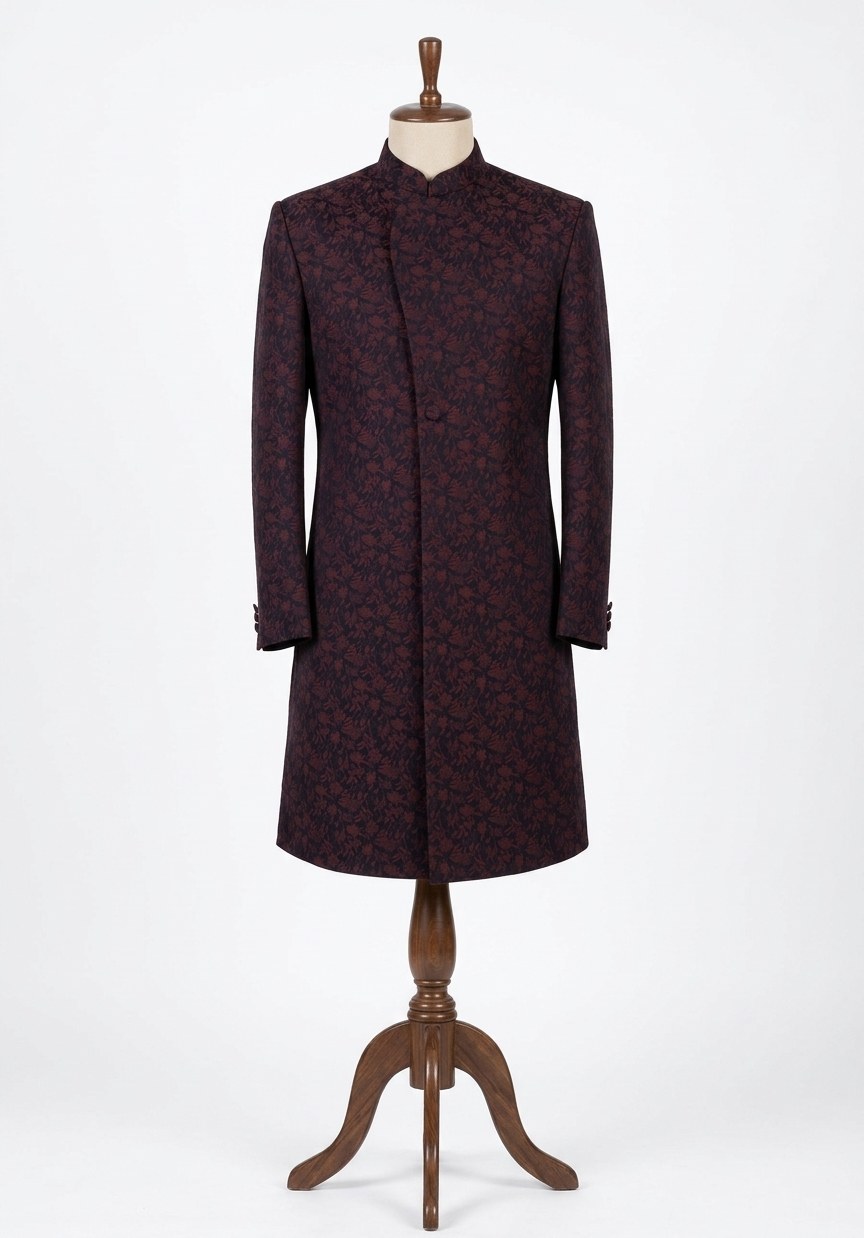
Brocade is woven, not printed and not embroidered. Extra threads, usually gold or silver zari, are carried into the ground cloth on the loom to build raised patterns, so the pattern is part of the fabric rather than something added to it afterwards. That makes it the most technically demanding and the most prestigious cloth in Indian dress: in a Banarasi brocade sherwani the weaver's skill is as visible as the tailor's. We buy brocade from Varanasi and from weavers here in Tamil Nadu, and a good deal of our job is talking customers out of the wrong one.
Banarasi, Kanjivaram and modern jacquard brocades
Banarasi brocade, woven in Varanasi on traditional handlooms, is the best known. The patterns run from geometric butas and diaper repeats to full floral jaals, worked in pure zari, real silver, or a synthetic substitute. Real zari has a warmth and depth the synthetic can't reach; it's also heavier and dearer. For a wedding sherwani, or anything at the top of the formality scale, real zari Banarasi is worth the difference.
Kanjivaram brocade, from Kanchipuram, a couple of hours from us, is woven in pure mulberry silk with zari through the border and body. Most people associate Kanjivaram with sarees, but the cloth also goes into men's sherwanis and formal kurtas, and it carries particular weight in Tamil and wider South Indian ceremonies. Its dense silk ground and bold patterning suit temple weddings especially well.
Choosing brocade: scale, colour and how loud you want to be
Pattern scale is the decision that matters most. A fine, small-scale geometric brocade, with small diamonds or teardrops in a thread close to the ground colour, reads as texture from across a hall and reveals its detail only when someone is standing next to you. That's the versatile option for a bandhgala or a bandi, where you want richness without shouting. A large floral or paisley that reads clearly from several metres away carries far more impact and belongs on a sherwani, where the coat is meant to be the statement.
Colour is really two decisions: the ground and the zari. Gold zari on a deep ground is the traditional combination, so burgundy, royal blue, emerald, black or classic ivory. Silver zari is cooler and more contemporary and looks its best on midnight navy or a deep forest green. Either way the metal should agree with the ground rather than compete with it, and if you're unsure, bring the churidar cloth in and we'll look at them together in daylight.