
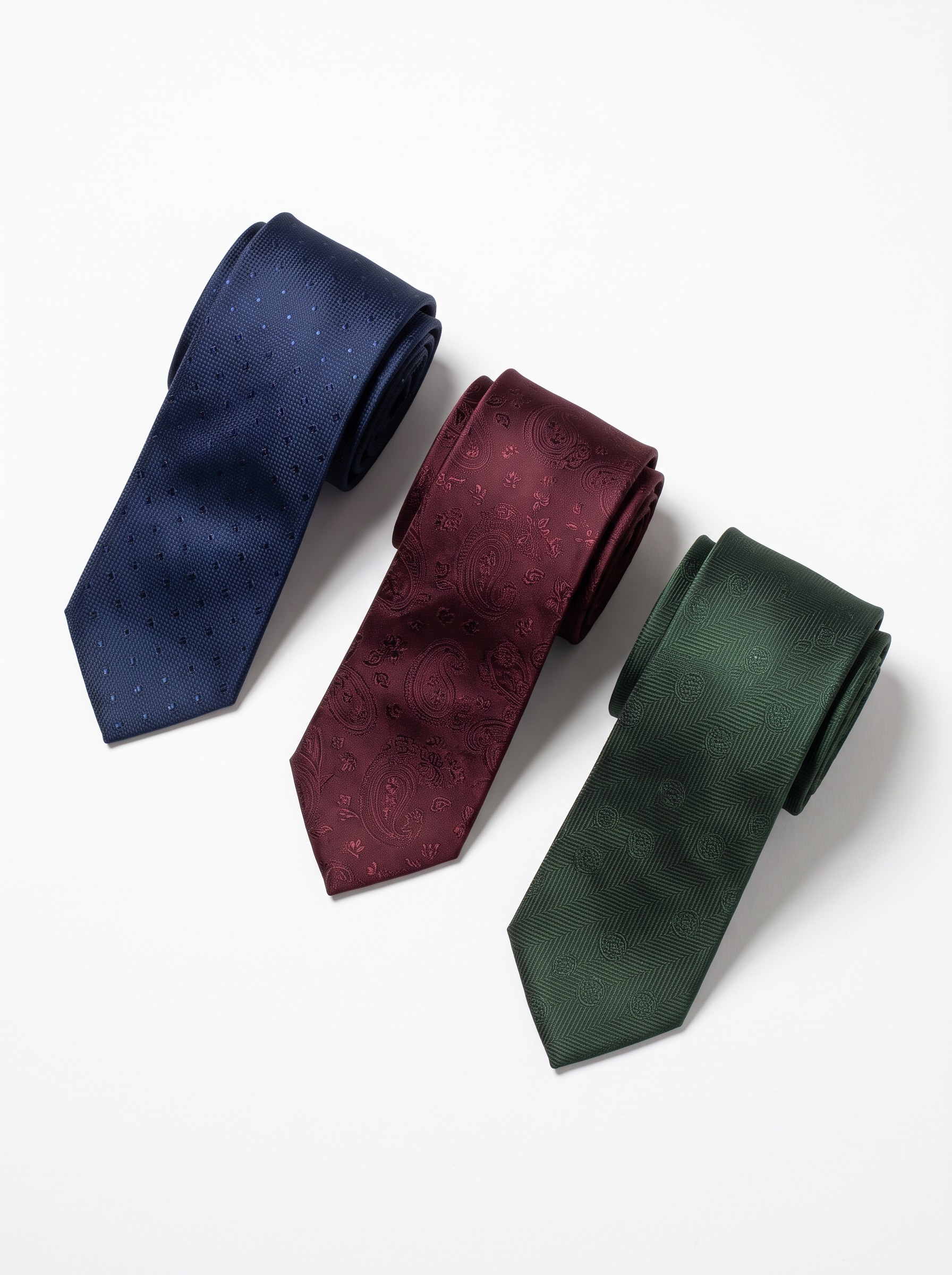
The tie is where the personality goes. A suit and shirt do the structural work, setting the shape and the ground colour, and then the tie finishes the picture with colour, pattern and whatever you want to say. A well made silk tie behaves differently from a cheap one in the hand and in the knot: good silk, an interlining matched to the weight of that silk, hand-rolled edges, and a slip stitch running down the back so it can move. We keep a range of silk ties from established weavers, and we would rather you held them against your actual suiting than picked one off a hook.
Three things that separate a good tie from a bad one
The silk, the interlining and the construction. A woven silk, where the pattern is made in the weave rather than printed on the surface, keeps its colour far longer, holds its texture through repeated cleaning, and ties a better knot than a printed silk of the same weight. Hold the two side by side and you can tell immediately which is which.
The interlining is what decides how the tie knots. Too light and the tie folds limply with no body to it. Too heavy and you get a stiff, angular knot that never looks quite right. The correct interlining, usually a fine wool felt matched to the weight of the silk, gives you a knot that is round, firm and springs back into shape.
Then the edges. A hand-rolled edge, where the silk is turned and stitched by hand instead of run through a machine, is one of the clearest signs of a good tie. It leaves the edge free to breathe and move rather than pinned flat, and it is a large part of why a good silk tie looks better at the end of the day than it did at the start.